


Ceiling Mounted Lift VS Floor Patient Lift: Which Is Better for Hospitals and Rehab?
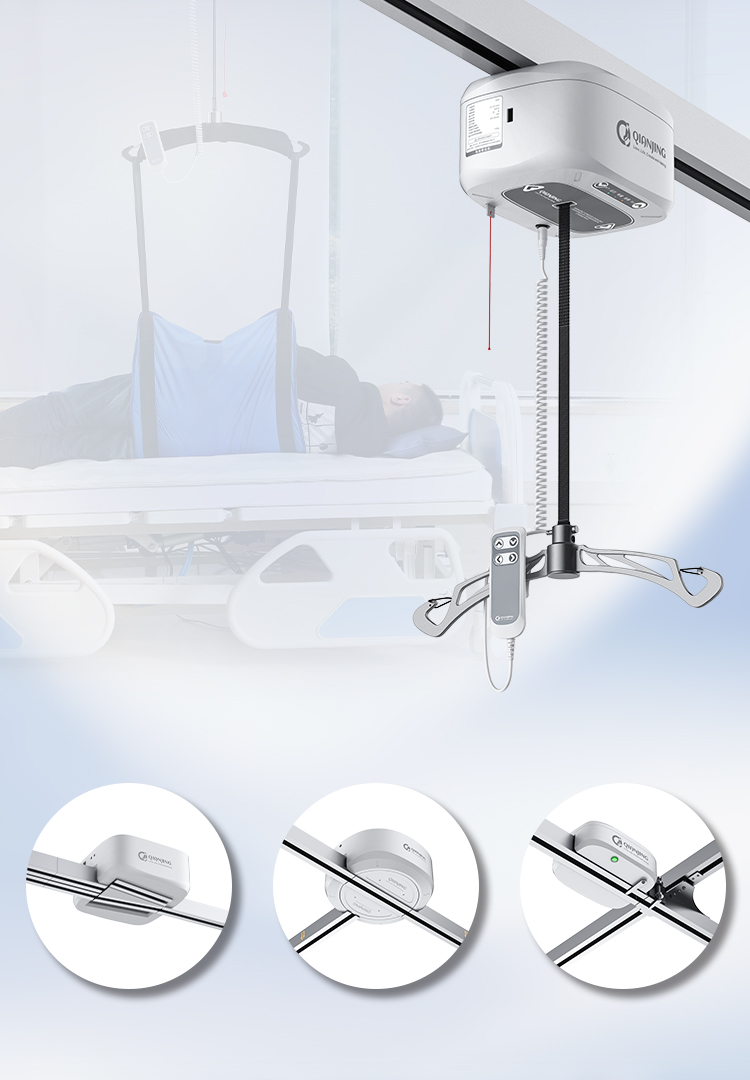
You want the best overhead patient lift for your hospital or rehab center. Ceiling lifts, like the Overhead Ceiling Track Hoist, are ideal in busy places with little space. They have strong safety features that enhance patient care. They make transfers easier for staff and patients, ensuring a smooth experience. Ceiling lifts save floor space, which is crucial in tight environments. They help reduce physical strain on caregivers, allowing staff to feel less tired. Patients also feel more comfortable during transfers with an overhead patient lift. Floor patient lifts provide flexibility and mobility, which is beneficial in small or temporary spaces. The right choice of lift depends on your facility’s needs and the specific mobility requirements of your patients.
Key Takeaways
Ceiling lifts help keep the floor clear and make things safer. They work well in hospitals and rehab centers that are busy.
Floor patient lifts can move around and are easy to use. They are good for short-term use or small rooms.
Pick a ceiling lift if you need to move patients often. It helps staff feel less tired and keeps patients comfortable.
Think about how much weight the lift can hold and how the room is set up. This helps you pick the right lift for your place.
Patient lifts need to be checked often to keep them safe and working well. This is important for good patient care.
Comparison Overview
Ceiling Lift vs Floor Patient Lift: Key Points
Before you pick a lift for your hospital or rehab, you should know the main differences. The table below shows how ceiling lifts and floor patient lifts are not the same. It compares them in safety, space, and how easy they are to use.
Feature | Ceiling Mounted Lifts | Floor Patient Lifts |
|---|---|---|
Space | Operates overhead, keeping the floor clear | Requires clearance and maneuvering room |
Ease of Use | Provides smoother transfers, less physical effort | Can be harder to push, especially on uneven surfaces |
Installation | Requires mounting or track system | Ready to use out of the box |
Portability | Fixed unless using a portable track model | Can move from room to room |
Patient Comfort | Stable, gliding transfers, more secure | May cause discomfort due to sling pressure |
Independence | Can allow self-transfer for some patients | Nearly always requires caregiver operation |
Use Cases | Ideal for high-frequency transfer environments | Good for flexibility in smaller homes |
Ceiling lifts hang from above. They do not use up floor space. You can put them in small rooms or busy hospital areas.
Ceiling lifts help staff move patients more easily. They make it less hard for workers and more comfy for patients.
Floor patient lifts, also called hoyer lifts, need more space. They must move around beds and other things in the room.
Using a hoyer lift can be tough for staff. It is harder to push on carpet or bumpy floors.
A hoyer lift can go from one room to another. This is good if you need to move it a lot or use it in different places.
Hospitals like ceiling lifts for busy spots. They are safer and help staff work faster.
Rehab centers may use a hoyer lift if they need to move it or if space is not a problem.
Staff say they get hurt less when using ceiling lifts. This means both patients and workers stay safer with the right lift.
Tip: If you want to keep staff safe and make moving patients easier, use a ceiling lift in busy places. Use a hoyer lift if you need to move it or only need it for a short time.
Overhead Patient Lift Systems

How Overhead Patient Lifts Work
An overhead patient lift helps move patients safely. There are three main types used in hospitals and rehab centers. These are fixed, portable, and track-based systems. A ceiling lift uses rails on the ceiling to move patients. This keeps the floor clear and makes moving faster. You attach slings to the lift and guide the patient along the track. The Overhead Ceiling Track Hoist uses smart technology to match how the patient moves. It has three training modes for stretching, balance, and walking. This is great for patients who need help moving or getting better.
Safety Features of Ceiling Lifts
Ceiling lifts have strong safety features for patients and caregivers. They have emergency stop buttons and overload protection. There are also alerts you can see or hear. The Overhead Ceiling Track Hoist adds systems to stop bumps and falls. These features help stop accidents when moving patients. The battery lets the lift work for over 12 hours if the power goes out.
Safety Feature | Description |
|---|---|
Emergency Stop Button | Stops the lift right away in an emergency. |
Overload Protection | Blocks lifting if the weight is too high. |
Audible/Visual Indicators | Gives alerts and feedback during use. |
Anti-Collision/Anti-Fall | Prevents bumps and drops during transfers. |
Pros of Ceiling Lifts
Ceiling lifts have many good points. They make moving patients safer and faster. Staff do not have to lift heavy things, so they hurt their backs less. Patients feel safe and comfortable. Ceiling lifts help patients do more on their own, especially with an independent ceiling lift. The system works well in small spaces and can connect rooms. You can use it for many patients, even those who cannot move much.
Easy lifting and lowering
More patient independence
More comfort and security
Good for small spaces
Fewer falls and injuries
Cons of Ceiling Lifts
You must plan before installing a ceiling lift. The ceiling must be strong and the setup must be careful. A specialist may need to check your space and design the track. Staff may need training to use it. Once it is set up, the lift stays in one place. It is not as easy to move as some other lifts.
Best Use Cases for Hospitals & Rehab
Ceiling lifts are best where you move patients often. Hospitals use them to move patients from beds to chairs. Rehab centers use them for exercises and safe movement. Long-term care homes use ceiling lifts for bathing, turning, or moving patients in bed. Home care also uses ceiling lifts to help patients feel safe and comfortable.
Scenario | Description |
|---|---|
Hospitals | Move patients safely from beds to chairs, reducing strain and accidents. |
Rehabilitation Centers | Support mobility training and safe daily transfers. |
Long-term Care Facilities | Help with bathing, turning, and repositioning for bedridden patients. |
Home Care Environments | Allow easy transfers while keeping patient dignity and comfort. |
Note: Overhead patient lift systems help people move safely every day. They also help caregivers avoid getting hurt and help patients do more on their own.
Floor Patient Transfer Lift
How Floor Patient Transfer Lifts Work
You use a floor patient lift when you need to move someone who cannot stand or walk. These lifts have a wheeled base, a strong vertical mast, and a lifting boom. The boom holds a sling that supports the patient during the transfer. You can roll a mobile patient lift to the patient’s bed, chair, or even the floor. This makes it possible to help patients who have fallen or cannot get up on their own. In medical and rehab rooms, you often see these lifts because they help staff move patients safely. You need to learn how to use the lift and follow safe patient handling steps. Training helps you protect both yourself and the patient.
You can use a mobile patient lift to raise a patient from the floor to a bed or wheelchair.
These lifts help you avoid lifting heavy weights by hand.
You can use them in many medical settings, including rehab rooms and long-term care.
Pros of Floor Lifts
A mobile patient lift gives you flexibility and mobility. You can move it from one room to another. This is helpful in rehab rooms where you need to transfer patients in different places. You can find many types, including manual and electric models. Some lifts have a high capacity, so you can use them for bariatric patients. These lifts are easy to use and do not need a fixed track.
Advantage | Description |
|---|---|
Portability | You can move the lift to any room, making it a true transfer anywhere lifts. |
Adaptability | You can choose from different designs and capacity, including bariatric lifts. |
Ease of Use | You can operate most lifts with simple controls, even in busy medical settings. |
Tip: If you need to move a patient in a small rehab room or a crowded medical area, a mobile patient lift can help you do it safely.
Cons of Floor Lifts
You may find that a mobile patient lift takes up a lot of space. Large lifts can be hard to use in narrow hallways or small bathrooms. You need enough clearance to move the lift around beds and other equipment. Some models are heavy and difficult to push, especially on carpet. You also need a place to store the lift when you are not using it. If you have a bariatric patient, you must check the lift’s capacity before use.
Large lifts may not fit in tight rehab rooms.
You may need a compact model for small spaces.
Storing a mobile patient lift can be a challenge in busy medical facilities.
Always check the capacity for bariatric transfers.
Best Use Cases for Hospitals & Rehab
You should use a mobile patient lift in hospitals and rehab rooms when you need to help patients who have fallen. These lifts work well for lifting patients from the floor to a bed, chair, or wheelchair. They are important in settings where safety and fall recovery matter most. You can use them for bariatric patients if you choose a lift with the right capacity. Mobile patient lifts improve nursing efficiency and make patient care safer. They reduce the strain on caregivers and help patients feel more comfortable during transfers.
Use in medical and rehab rooms for fall recovery.
Lift bariatric patients with a high-capacity model.
Move patients safely in hospitals and long-term care.
Note: Choosing the right capacity for your mobile patient lift ensures you can help all patients, including those who need bariatric support.
Safety and Efficiency Comparison
Safety Features: Ceiling Lift vs Floor Lift
You want to keep everyone safe during patient transfers. Ceiling lifts give you strong safety because they move along a fixed track. This design gives you stability and reduces the chance of tipping. You can trust the anti-collision and anti-fall systems in ceiling lifts. These features protect both patients and caregivers. Floor lifts also help with safety, but they can tip if you do not use them correctly. You need to check the wheels and brakes before each use. Stability matters most when you move patients who have limited mobility. Ceiling lifts offer more stability because they do not roll on the floor. You can rely on them in busy hospital rooms where space is tight.
Patient Comfort and Transfer Efficiency
You want your patients to feel comfortable and safe. Ceiling lifts help you provide smooth transfers. The ergonomic design of these lifts supports the patient’s body and keeps movements gentle. This makes the transfer feel more dignified and controlled. Patients feel less anxious because the lift does not shake or wobble. You can see that comfort improves when you use a ceiling lift. Floor lifts can also help, but they may press on the patient’s body in some positions. You need to adjust the sling carefully to avoid discomfort. Ceiling lifts save time because you do not need to move furniture or clear space. You can finish transfers faster and with less effort. This means you can help more patients each day.
Space and Accessibility
You need to think about space when you choose a lift. Ceiling lifts save space because they move above the floor. You do not need to push them around beds or equipment. This makes them perfect for small rooms or crowded hospital areas. You can connect ceiling lifts between rooms for better mobility. Floor lifts need more space to move. You must have clear paths and enough room to turn the lift. In small rehab rooms, this can be hard. You may need to move chairs or tables to make space. Ceiling lifts give you better accessibility because they do not block walkways. You can keep the floor clear for other equipment.
Feature | Ceiling Lift | Floor Lift |
|---|---|---|
Saves Space | Yes | No |
Accessibility | High | Medium |
Mobility | Room-to-room (track) | Portable, but bulky |
Stability | Very stable | Stable if used properly |
Tip: If you want to make the most of your space and keep the area open, choose a ceiling lift.
Cost and Maintenance
You need to plan for costs and maintenance when you pick a lift. Ceiling lifts cost more at first because you must install tracks and motors. You get full support from the manufacturer’s warranty. You also get a one-year labor warranty for new installations. Regular maintenance plans help you keep the lift working well. Floor lifts cost less to buy, and you do not need to install them. You still need to check them often and fix any problems. Both types of lifts need service to stay safe and reliable. You should look at your budget and think about long-term costs. Ceiling lifts may cost more at first, but they last a long time and need less daily care.
Note: Regular maintenance keeps your lift safe and ready for every transfer.
Choosing the Right Patient Transfer Lift
Factors for Hospitals
You need to think about a few key things before picking a patient transfer lift for hospitals. Hospitals have lots of patients and are busy places. You should check how much space you have in each room. Ceiling lifts are good in crowded rooms because they do not block the floor. You must look at the lift’s weight limit. Some patients are heavier and need bariatric support, so your lifts must handle big loads. You also need to know how many rooms the lift will be used in. If you want to move patients between rooms, a ceiling lift with tracks can connect different areas. Emergency controls are important in hospitals. Make sure your lift has backup power if the electricity goes out. Hospitals usually need lifts that last a long time, so a permanent ceiling lift is best.
How many patients are in the hospital
Space and room layout in the hospital
Weight limit for all patients
How many rooms the lift will cover
Emergency controls and backup power
Long-term use in the hospital
Tip: Hospitals do well with ceiling lifts that connect rooms and have strong safety features.
Factors for Rehab Centers
Rehab centers have needs that are not the same as hospitals. You must think about how much help your patients need to move. Some patients need full support, while others only need help with balance or walking. Your rooms may be smaller, so you need to see if a ceiling lift or floor lift fits better. If you use the lift for short rehab stays, a portable floor lift may be a good choice. For longer rehab, a ceiling lift gives more comfort and stability. You should check the weight limit for your lifts, especially if you have bariatric patients. The way your rooms are set up will help you decide if you need a lift for one room or many rooms. Budget is important in rehab centers. You must pick a lift that fits your financial plan.
Patient mobility in the rehab center
Room size and layout in the rehab center
How long the lift will be used
Weight limit for all patients
How many rooms in the rehab center
Budget for the rehab center
Note: Rehab centers pick lifts based on how much help patients need and how much space they have.
You should pick the lift that fits your facility’s needs. Ceiling lifts are great for busy hospitals with not much space. They have good safety features and help staff move patients quickly. Floor patient transfer lifts are easy to move and use in different places. Think about how many patients you have, where you will use the lift, and your budget before you decide.
Tip: Use a ceiling lift if you move patients a lot or have small spaces. Choose a floor lift if you need something you can move or use for a short time.
FAQ
What is the main benefit of a ceiling lift in hospitals?
You save floor space with a ceiling lift. You also make patient transfers safer and faster. Staff feel less strain during daily tasks.
Can you use a ceiling lift for all patients?
You can use a ceiling lift for most patients. Always check the weight limit and sling type. Some patients may need special slings for extra support.
How do you maintain a patient transfer lift?
You should inspect the lift before each use. Clean the sling and check for damage. Schedule regular maintenance with a certified technician.
Tip: Regular checks keep your lift safe and ready for every transfer.
Which lift is easier to move between rooms?
You can move a floor patient lift from room to room. A ceiling lift stays fixed unless you have a track system that connects rooms.
Lift Type | Room-to-Room Mobility |
|---|---|
Ceiling Lift | Fixed or track-based |
Floor Patient Lift | Portable |

