

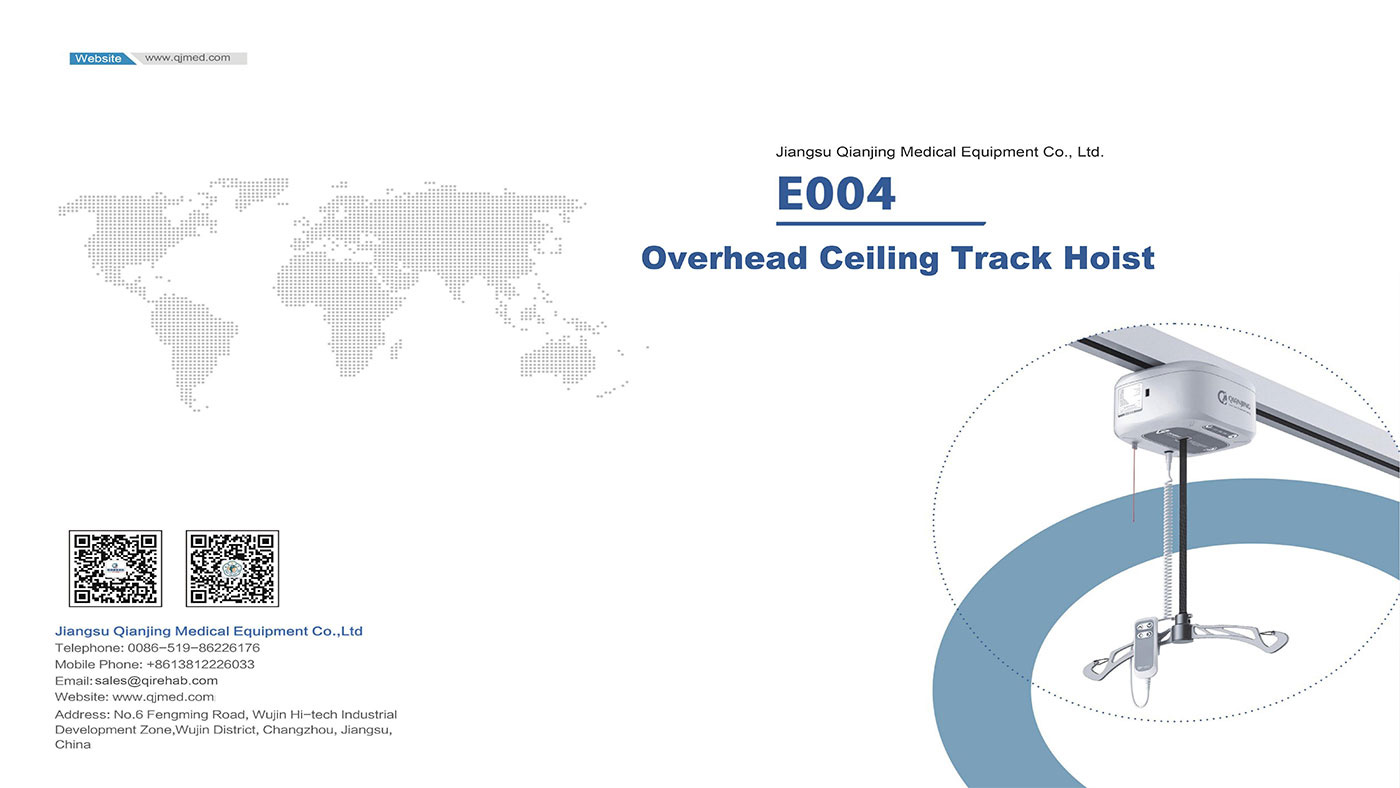
QianJing Rehabilitation provides advanced overhead lift system solutions designed for hospitals, rehabilitation centers, nursing homes and elderly care facilities. Our overhead ceiling lift and overhead track lift systems help caregivers safely transfer patients while improving mobility assistance efficiency.
Sky Rail Shift System Intelligent Patient Lift & Gait Training
The overhead lift system is an advanced patient transfer solution designed for hospitals, rehabilitation centers, nursing homes, and elderly care facilities. Equipped with various hanging accessories and flexible rail configurations, the overhead ceiling lift enables smooth patient movement through the track system. Driven by an intelligent motor, the lifting unit can move vertically and horizontally, assisting medical staff in transferring patients with limited mobility, changing postures, and providing daily care support in different environments.
The overhead track lift significantly improves patient comfort, transfer efficiency, and nursing safety while reducing the risk of secondary injuries. Compared with traditional manual handling methods, the ceiling track hoist helps reduce caregiver workload and labor costs. With a stable ceiling hoist system, one caregiver can complete patient transfer tasks that previously required multiple staff members, lowering nursing intensity and reducing occupational strain.
The intelligent ceiling hoist track system integrates motion recognition technology to automatically adjust lifting parameters according to patient movement patterns, walking speed, and transfer direction. It supports weight-bearing rehabilitation training, records training data in real time, and dynamically monitors the rehabilitation process, providing a smarter and more efficient solution for modern rehabilitation care.
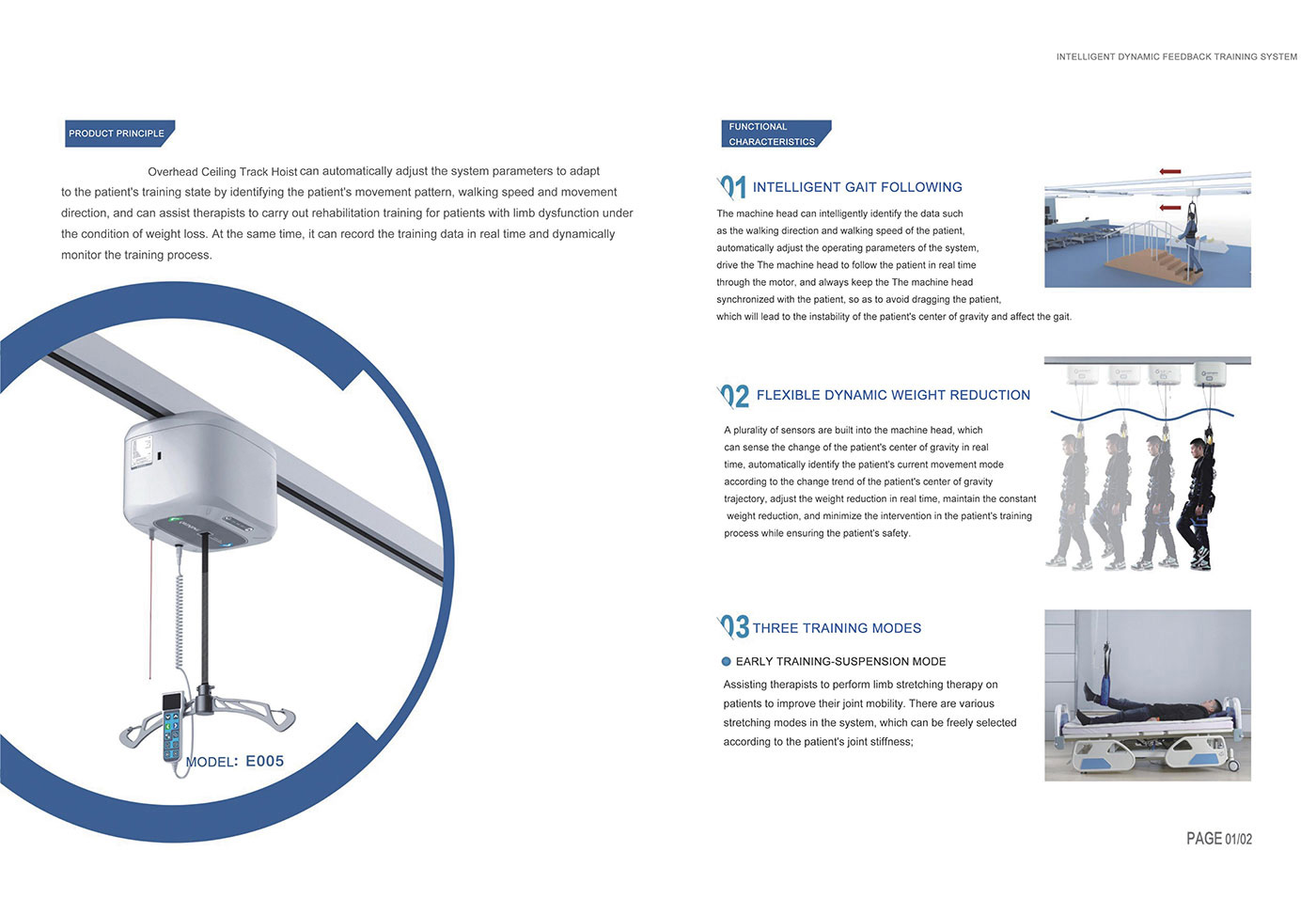
The ceiling track hoist machine head identifies walking direction and speed, auto-adjusts parameters, drives the head to follow synchronously, avoids center-of-gravity destabilization.
Multiple sensors sense center-of-gravity changes, identify movement mode automatically, adjust weight reduction in real time to maintain constant support.
Early Training Suspension Mode: Assist limb stretching, improve joint mobility, multiple stretching modes available.
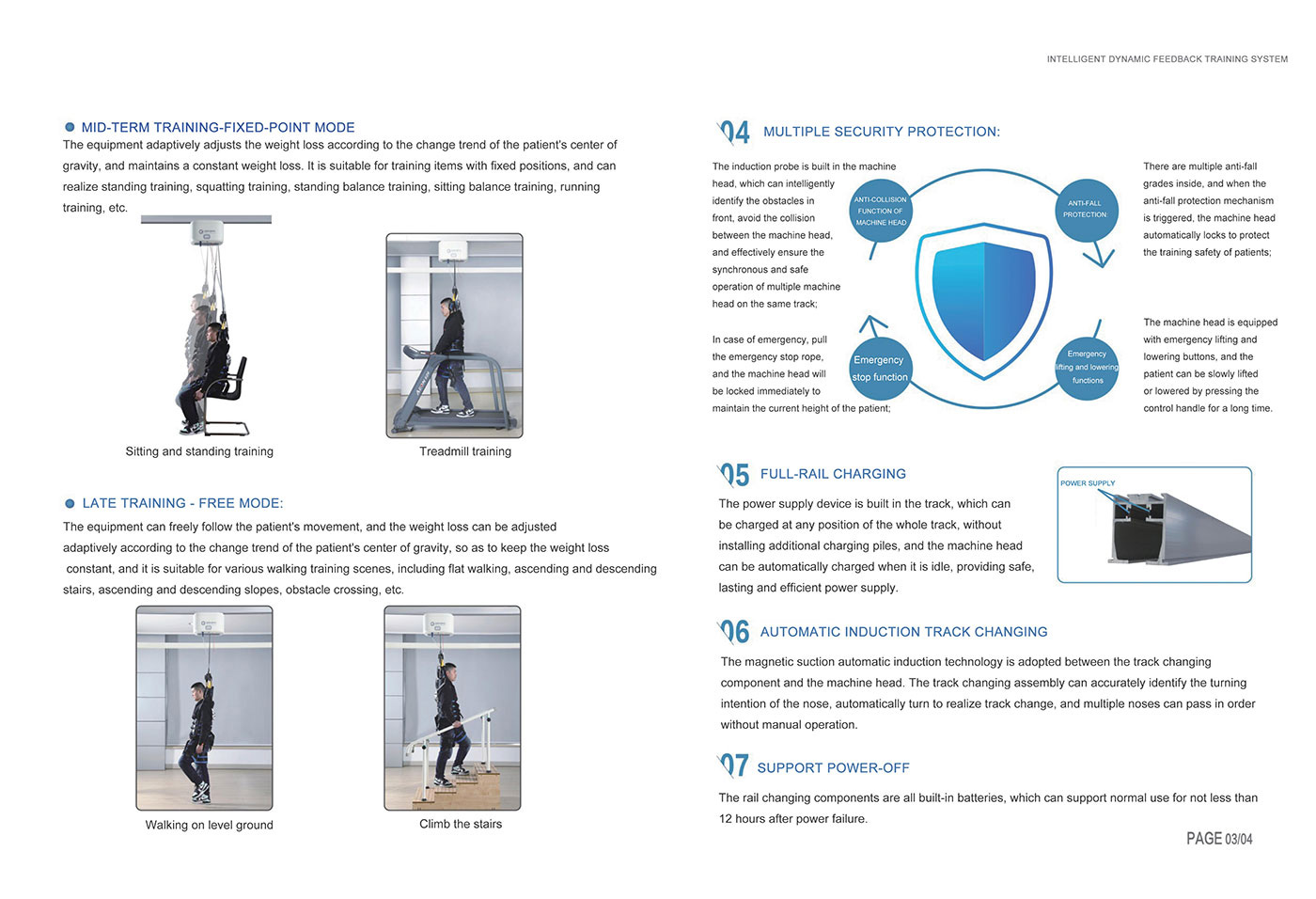
Mid-Term Fixed-Point Mode: Adaptively adjust weight loss, suitable for standing, squatting, balance and running training.
Late Free Mode: Freely follow movement, adapt to walking, stairs, slopes, obstacle crossing training.
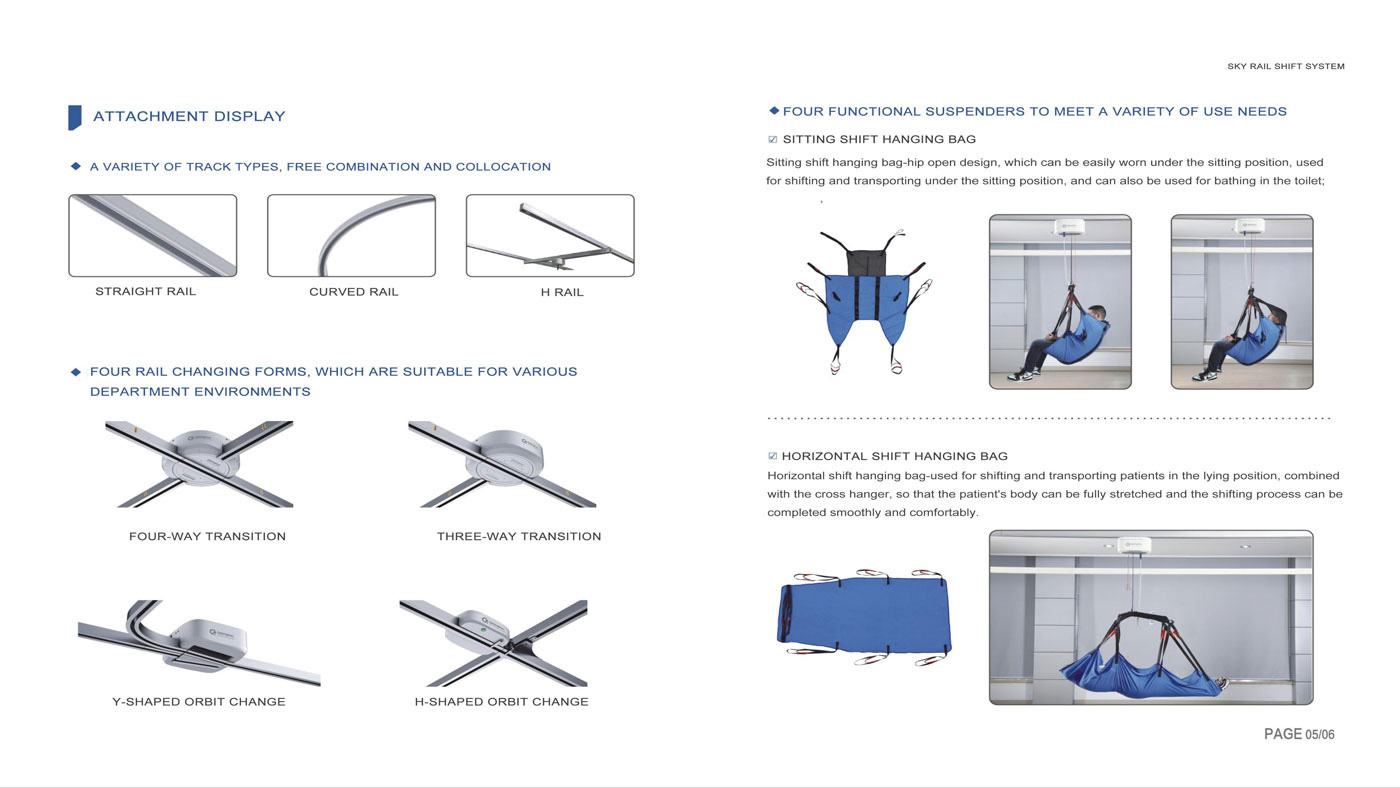
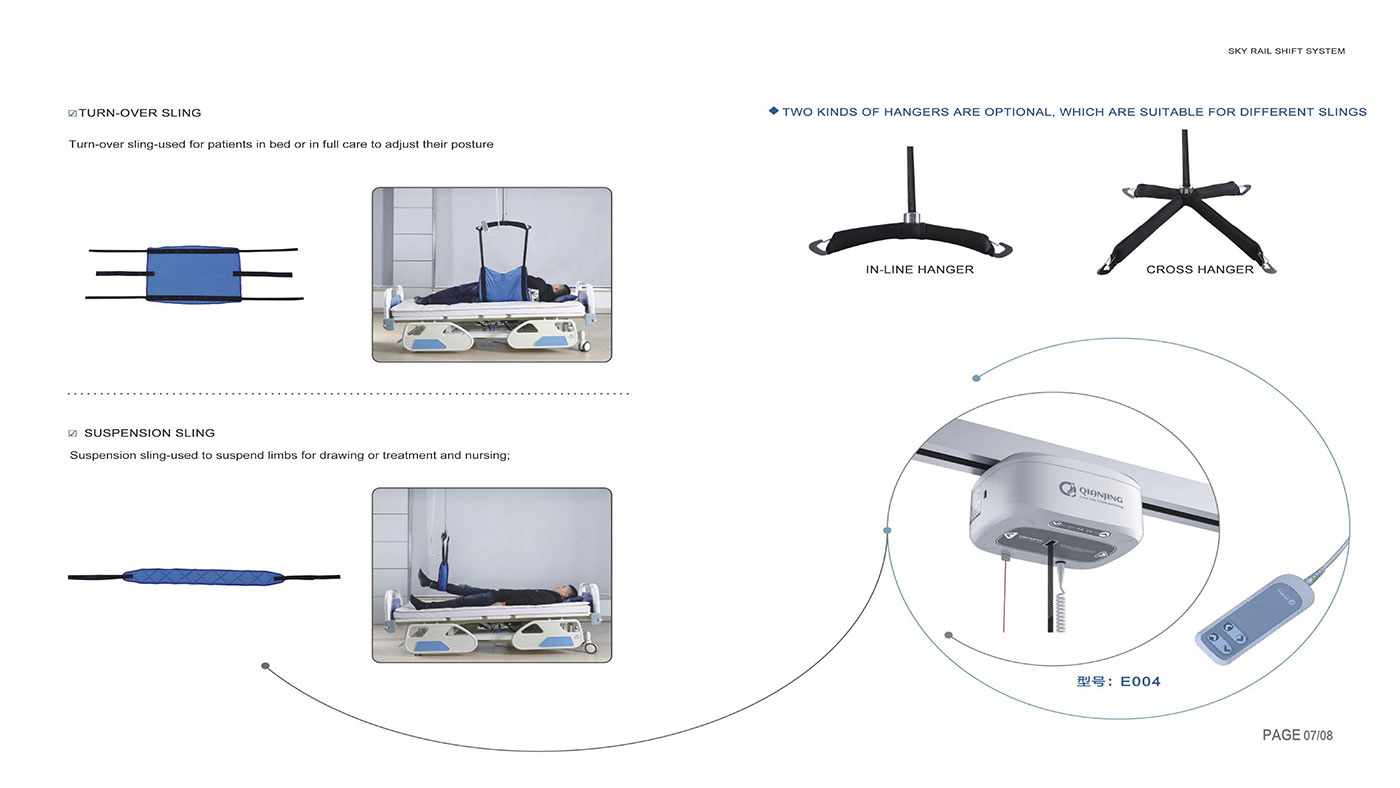
Sitting Shift Hanging Bag: Hip-open design, easy wearing for sitting transfer, bathing, toileting.
Horizontal Shift Hanging Bag: For lying position transfer, full body stretch with cross hanger.
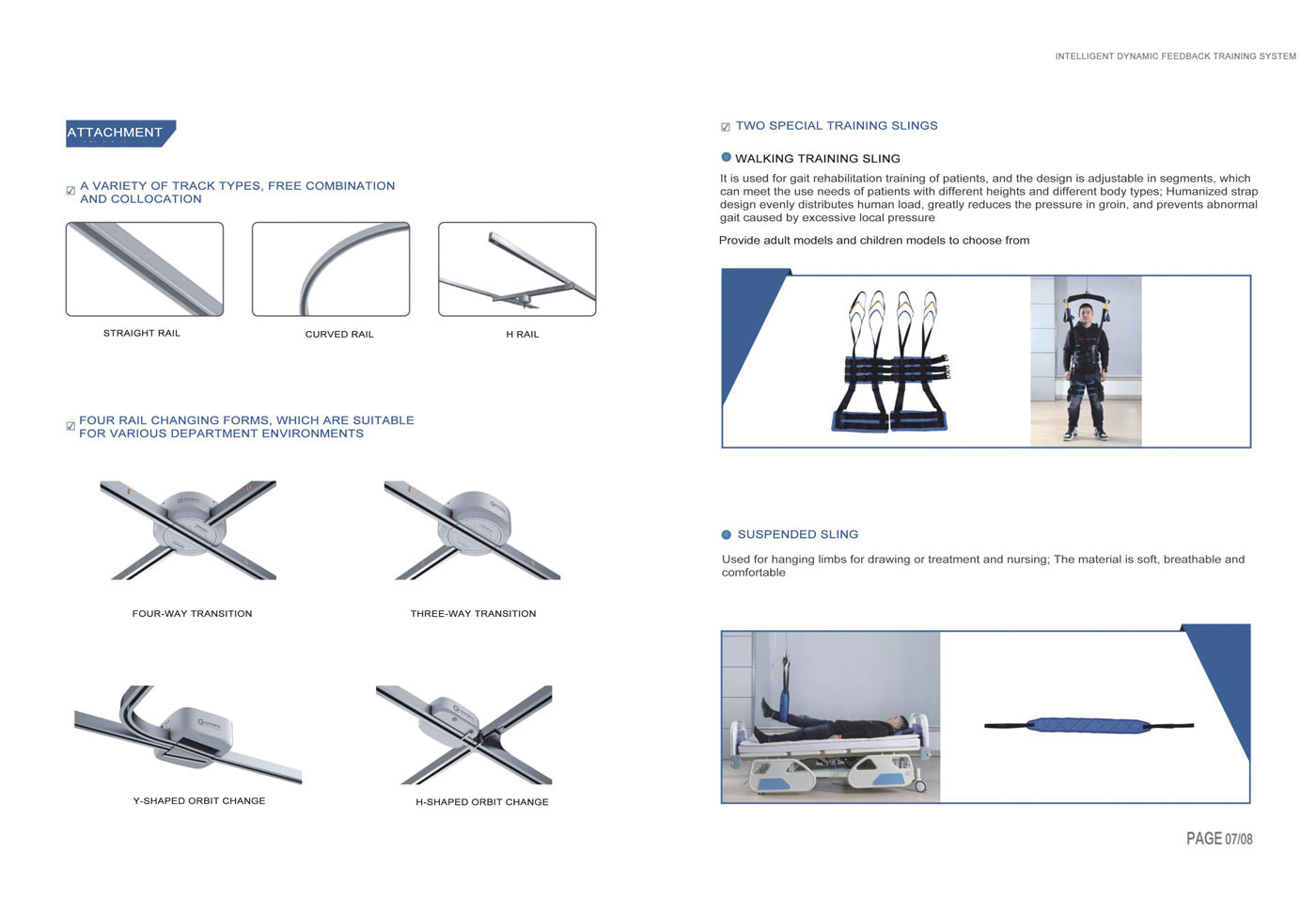
Walking Training Sling: Segmented adjustable, adult & child models, reduce groin pressure.
Suspended Sling: For limb traction & treatment, soft breathable material.
The overhead lift system from QianJing Rehabilitation is designed with advanced lifting technology and flexible configurations to provide efficient patient transfer solutions for hospitals, rehabilitation centers, and elderly care facilities. The overhead ceiling lift and overhead track lift systems combine intelligent control, smooth movement, and ergonomic design to support different rehabilitation and healthcare applications.
The overhead lift system features a flexible track layout that can be customized according to different room structures, rehabilitation spaces, and patient care requirements.
The ceiling hoist track system supports straight, curved, and multi-directional rail configurations, allowing caregivers to transfer patients smoothly between beds, wheelchairs, bathrooms, and therapy areas.
The modular design of the overhead ceiling lift makes installation and maintenance easier while maximizing space utilization in healthcare environments.
The overhead track lift uses a powerful motor and intelligent control system to provide stable lifting and horizontal movement, ensuring comfortable and secure patient transfers.
The ceiling track hoist reduces manual handling pressure for medical staff and helps minimize the risk of patient injuries during daily mobility assistance.
The advanced ceiling hoist system provides quiet operation and precise movement control, improving patient comfort and caregiver efficiency.
The overhead lift system is widely used in hospitals, rehabilitation centers, nursing homes, and elderly care facilities for professional patient transfer and mobility training.
The ceiling hoist system supports various rehabilitation scenarios, including stroke recovery, neurological rehabilitation, lower limb dysfunction training, and daily nursing care.
With reliable performance and flexible applications, the overhead ceiling lift provides an ideal solution for modern rehabilitation environments.
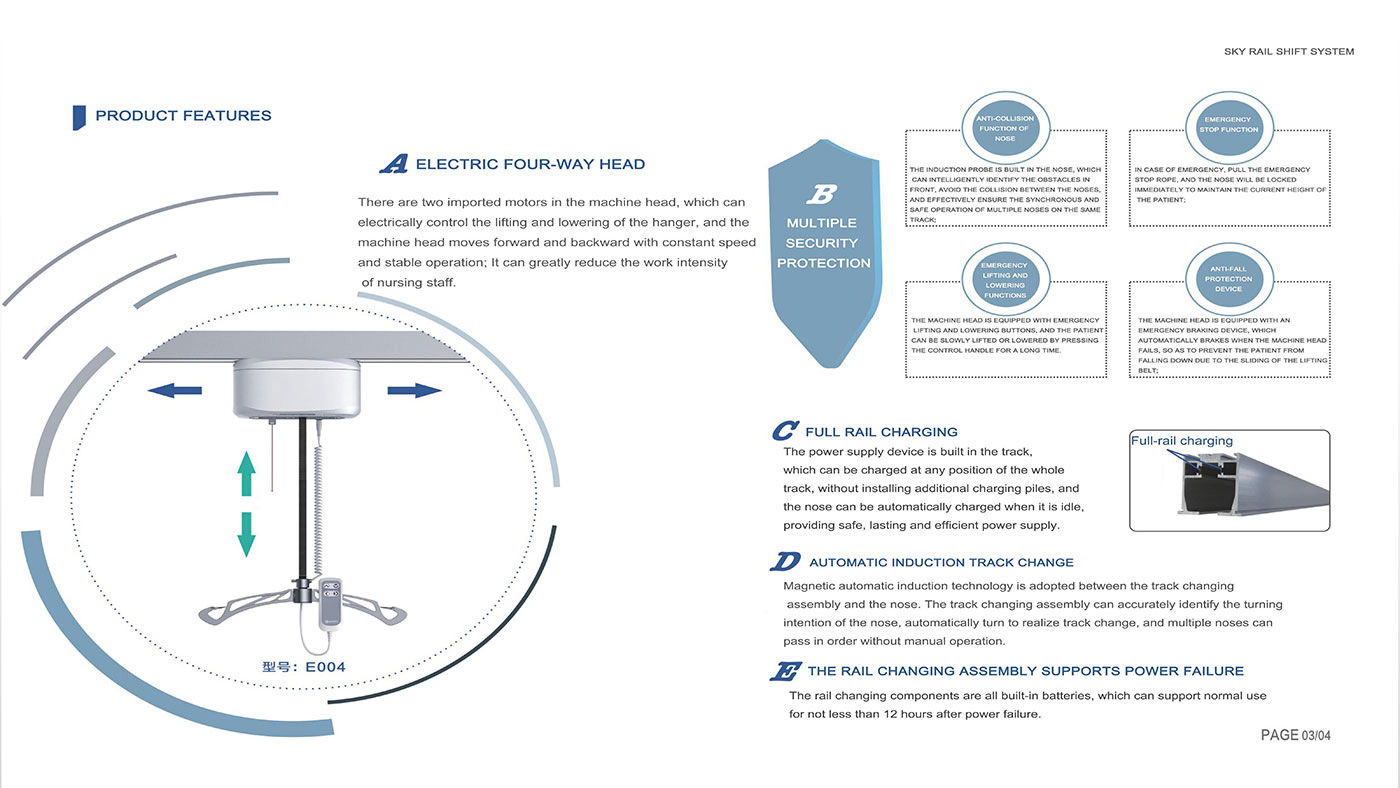
Power Failure Support: Built-in battery supports ≥12 hours normal use after power off.
The overhead track lift is designed to assist patients with different mobility levels, including elderly individuals, disabled patients, and people recovering from surgery or neurological conditions.
The intelligent ceiling hoist track system can adjust lifting parameters according to patient conditions, movement patterns, and rehabilitation requirements.
By providing safe and comfortable transfer support, the overhead lift system helps improve patient independence while reducing caregiver workload.
Anti-Collision Function: Probe identifies obstacles, head locks immediately to avoid collision.
Anti-Fall Protection: Emergency stop rope locks head, multi-level auto-lock protection.
Emergency Braking: Prevent falling caused by lifting belt slippage.
Emergency Lifting Buttons: Slow lifting/lowering via long press control handle.
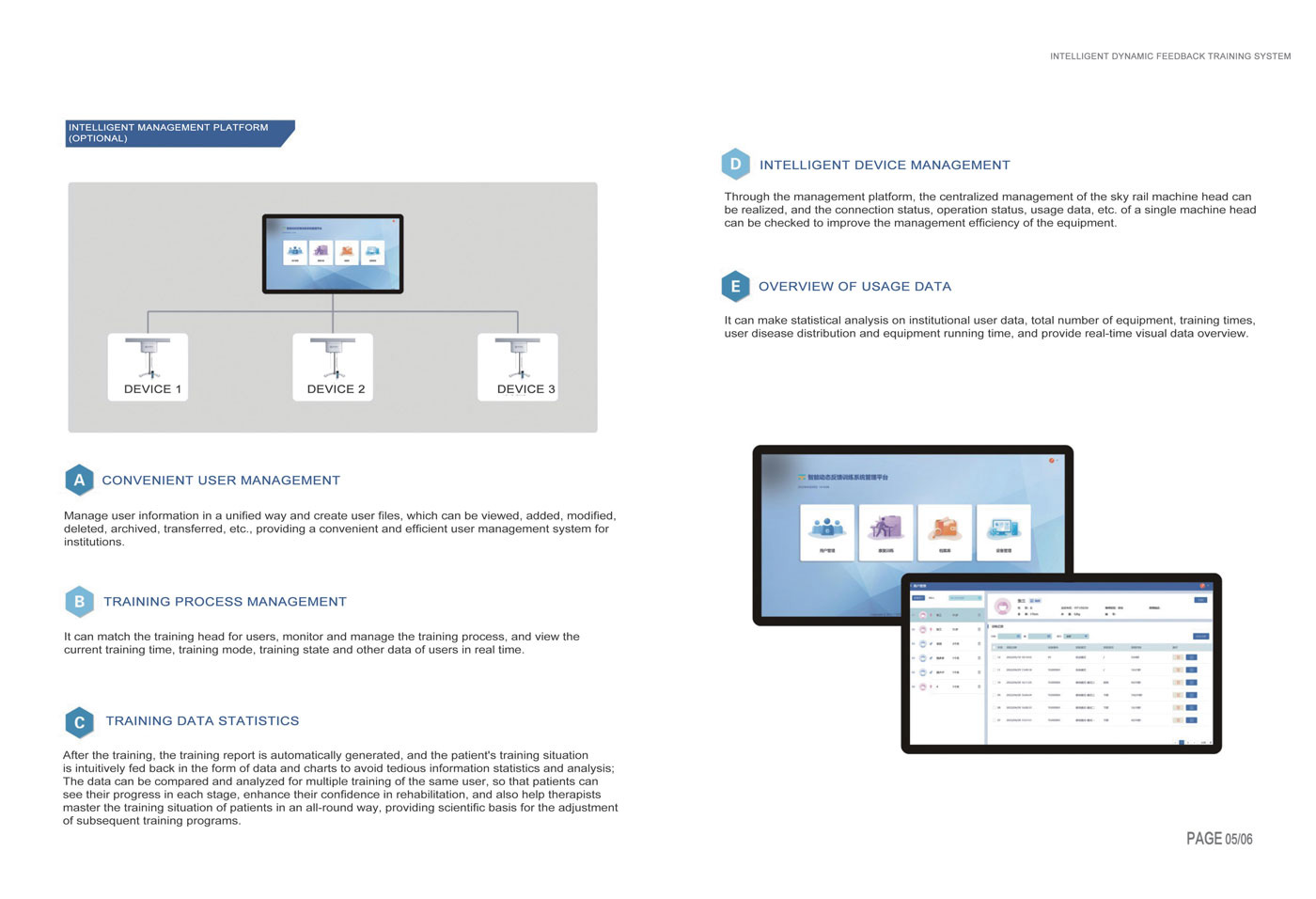
Unified user file creation, view, add, modify, delete, archive, transfer.
Match training heads, monitor time, mode, status in real time.
Auto-generate chart reports, comparative analysis across sessions.
Centralized control, operation status, usage data, visual overview.
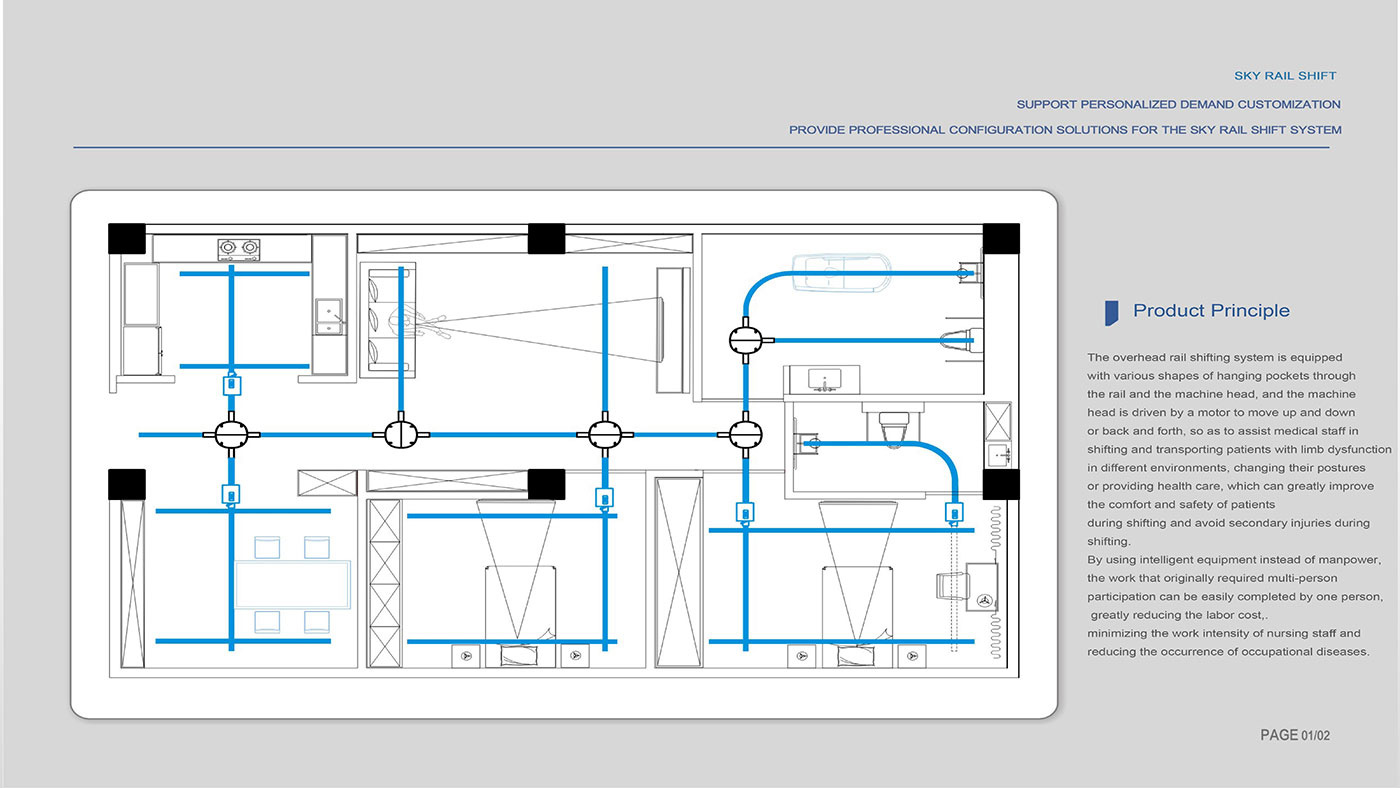
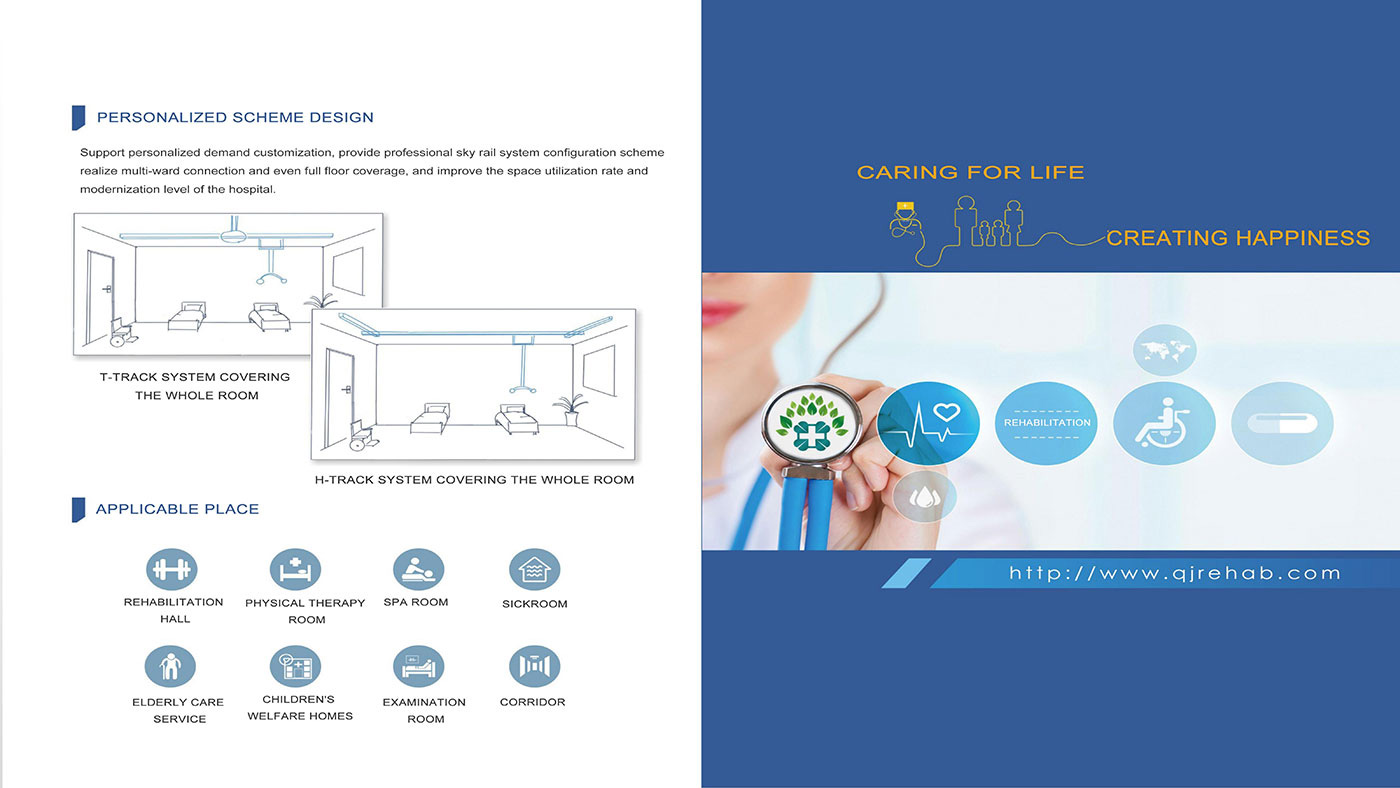
Support personalized customization, professional sky rail system configuration, multi-ward connection, full-floor coverage, improve space utilization and hospital modernization.
Rehabilitation Hall
Physical Therapy Room
Sickroom
Elderly Care Service
Children's Welfare Homes
Examination Room
Corridor
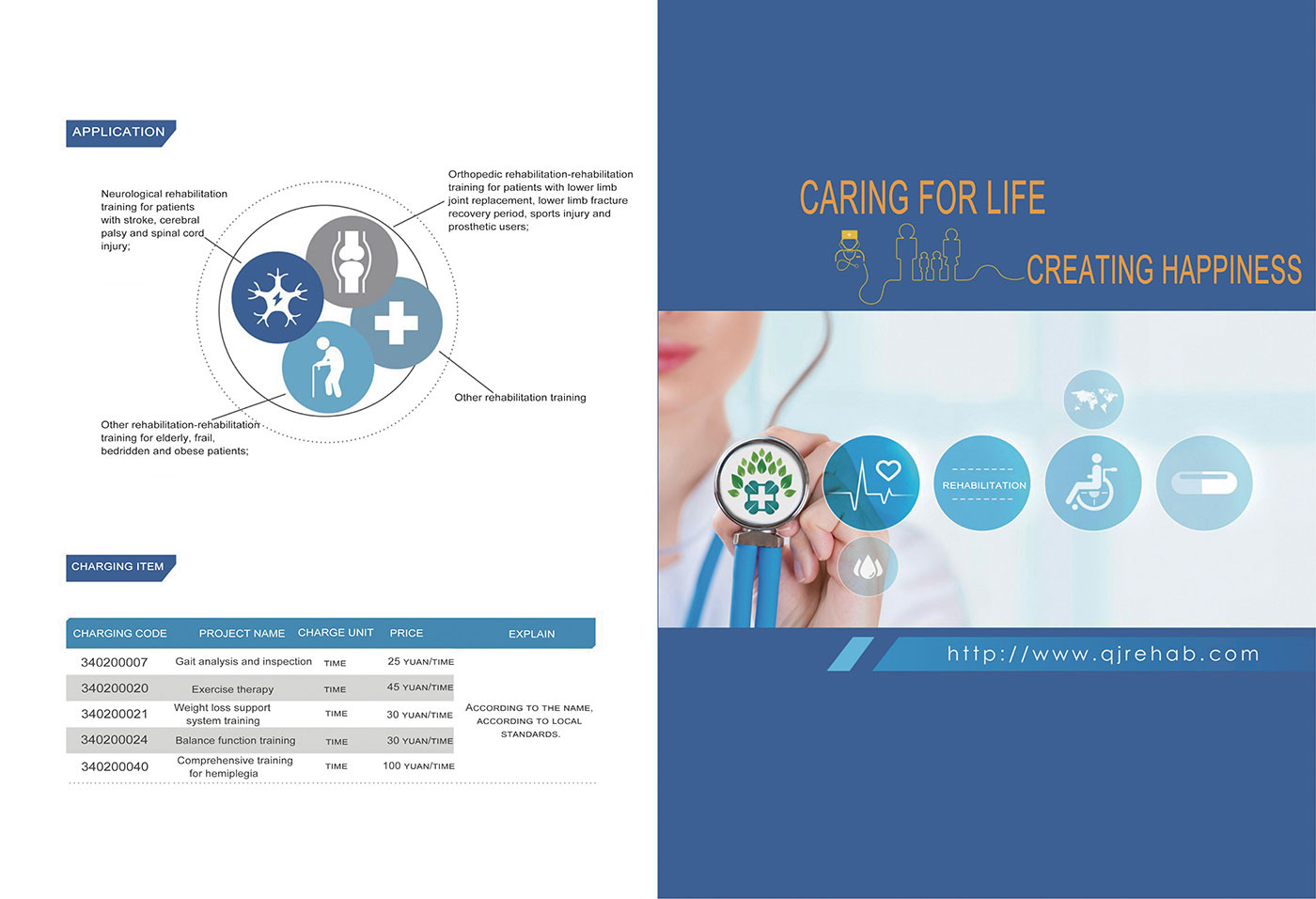
Neurological Rehab: Stroke, cerebral palsy, spinal cord injury
Orthopedic Rehab: Joint replacement, fracture recovery, prosthetic users
Others: Elderly, frail, bedridden, obese patients
1. What is an Overhead Lift System?
An overhead lift system is a motorized patient transfer solution designed to lift, move, and reposition patients along an overhead rail structure. The system uses an electric lifting unit connected to a ceiling hoist system, helping caregivers safely transfer patients with limited mobility.
Compared with traditional mobile patient lifts, an overhead ceiling lift saves floor space and provides smoother movement for hospitals, rehabilitation centers, nursing homes, and elderly care facilities. It can also support gait training and rehabilitation exercises for patients recovering from stroke, neurological disorders, or lower limb dysfunction.
2. How does a ceiling hoist track system work?
A ceiling hoist track system operates through an electrically powered machine head that travels along installed rails, including straight rails, curved rails, and H-track configurations. The lifting unit raises and lowers patients through specially designed slings for safe and comfortable transfers.
The overhead track lift allows one caregiver to complete patient transfer tasks efficiently without requiring multiple staff members. The system provides smooth horizontal and vertical movement between beds, wheelchairs, bathrooms, and rehabilitation areas.
3. Can an Overhead Ceiling Lift Connect Multiple Rooms?
Yes. The overhead ceiling lift can be designed with modular rail systems to connect multiple areas, including hospital wards, bathrooms, corridors, and rehabilitation rooms.
With advanced track-changing components, the ceiling hoist track system enables flexible movement between different spaces without moving patients manually. This makes the overhead lift system an ideal solution for hospitals and rehabilitation facilities that require efficient patient transfer across multiple environments.
4. Is the Overhead Track Lift Safe for Patient Transfer?
Yes. Safety is one of the most important features of a professional overhead track lift. The system integrates multiple safety functions, including anti-collision protection, anti-fall mechanisms, emergency braking, and battery backup systems for power interruptions.
The reliable ceiling track hoist design helps reduce the risk of patient falls and secondary injuries while improving caregiver safety during daily transfer operations.
5. Does the Ceiling Hoist System Support Rehabilitation Training?
Yes. In addition to patient transfer, the ceiling hoist system can support various rehabilitation training applications.
The intelligent overhead lift system provides different training modes, including:
Suspension mode: Suitable for early-stage rehabilitation and weight-support training.
Fixed-point mode: Designed for intermediate rehabilitation exercises and posture control.
Free movement mode: Supports walking practice, stair training, and slope rehabilitation.
By combining lifting assistance with rehabilitation functions, the overhead ceiling lift helps patients improve mobility and walking ability during recovery.
6. What Types of Slings Are Available for the Overhead Lift System?
The overhead lift system supports different sling options according to patient conditions and rehabilitation requirements.
Common sling types include:
Sitting transfer slings for wheelchair and bed transfers
Horizontal transfer slings for patients requiring full-body support
Walking training slings for gait rehabilitation
Adult and pediatric slings for different patient groups
Suspended rehabilitation slings for weight-bearing exercises
These flexible sling options allow the ceiling track hoist and ceiling hoist system to meet different patient transfer and rehabilitation needs.
7. What is the difference between an overhead ceiling lift and a traditional patient lift?
An overhead ceiling lift uses a ceiling-mounted track system, saving floor space and providing smoother patient transfers compared with mobile lifting equipment.
8. How to choose an overhead track lift supplier?
When selecting an overhead track lift supplier, buyers should consider product quality, customization options, certifications, installation support and after-sales service.


Whatsapp: +86-13812226033
E-mail: info@qjmed.com
ADD: No.6 Fengming Road, Wujin Hi-tech Industrial Development zone, Wujin District, Changzhou, Jiangsu, China


