


How to Choose a Robotic Gait Trainer for a Rehabilitation Hospital
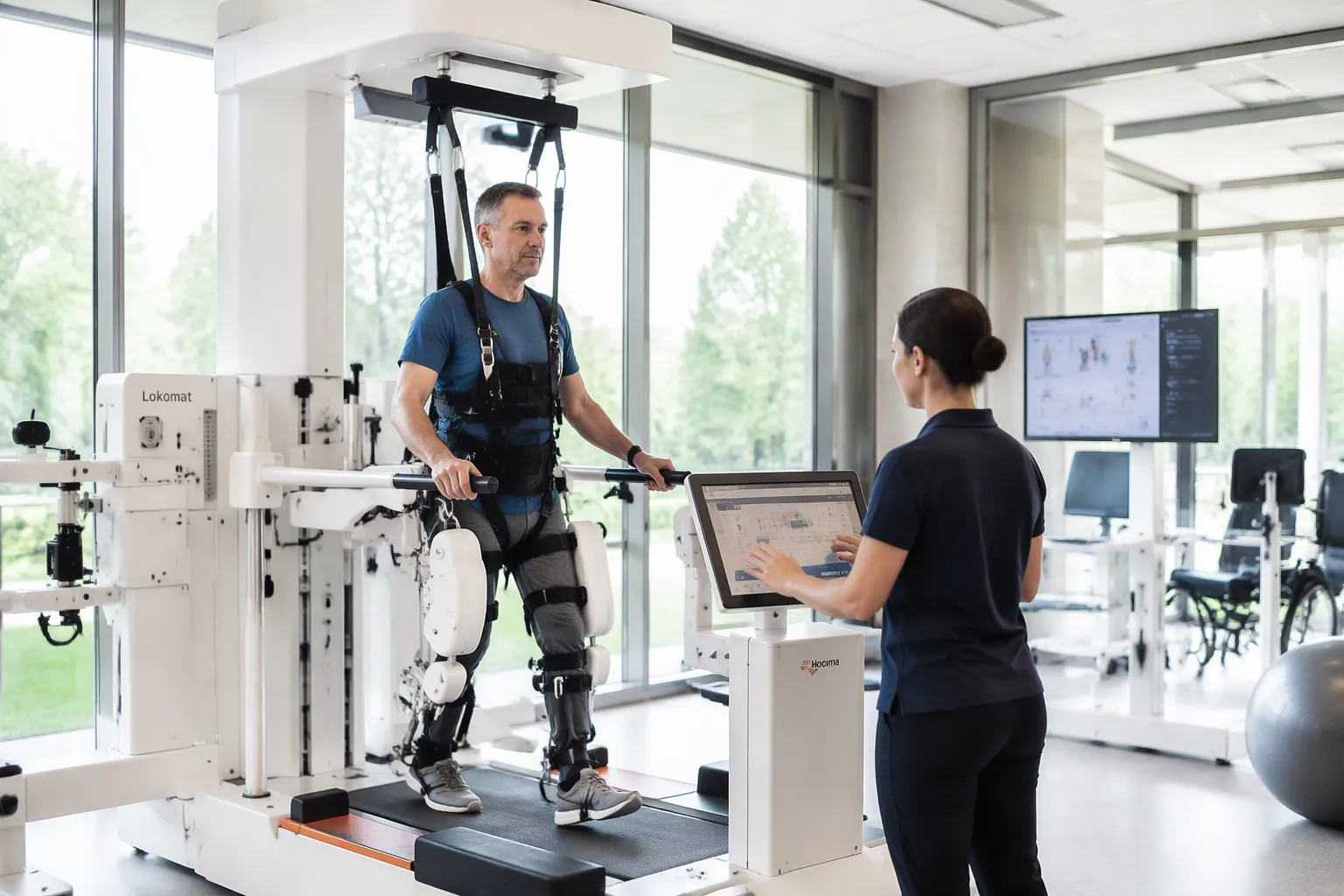
You can judge any robotic gait trainer using four pillars: technical performance, application fit, regulatory compliance, and total cost. These pillars really matter for your hospital. They affect patient results, therapist workload, the capital budget, and accreditation standing. This guide compares options only on these factors and explains where each type of device fits best. That approach helps you build a shortlist with confidence. A decision checklist appears at the end of the post. Use it to structure your rehabilitation equipment review and keep every stakeholder aligned.
Key Takeaways
Judge robotic gait trainers on four pillars: technical performance, application fit, regulatory compliance, and total cost.
Choose the device that fits your patients and therapy goals, not just the diagnosis.
Make sure it has FDA clearance or CE marking. Also check the clinical evidence, which should use trusted outcome measures.
Plan for the total cost of ownership, including buying, upkeep, training, and setup.
Use a checklist and on-site demos to get stakeholders involved and make a confident decision.
Technical Performance of a Robotic Gait Trainer
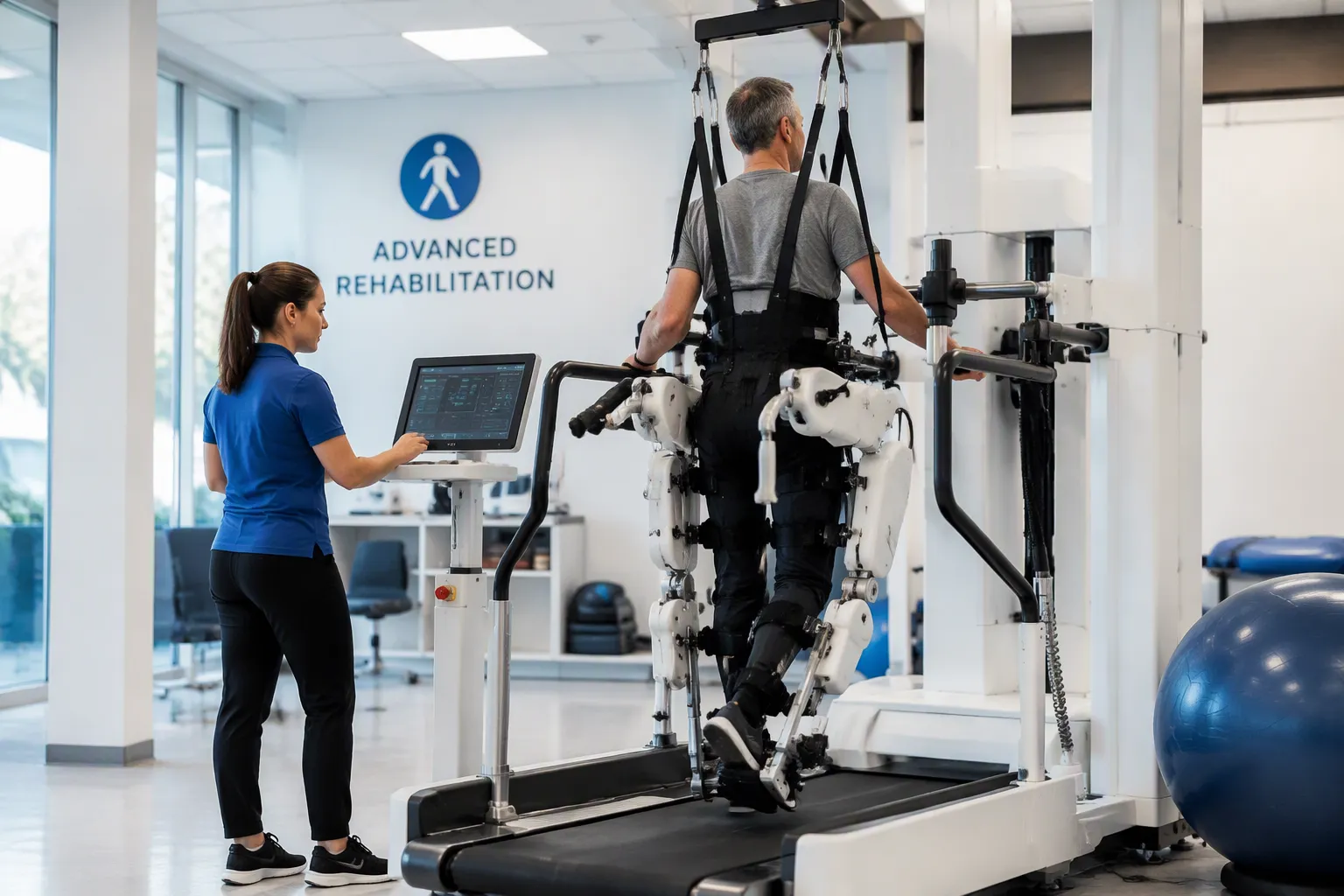
Three types of devices lead the market, and each one fits a different clinical role. Body-weight support systems hold the patient up and work well for early mobilization. End-effector devices guide the feet with robotic footplates and are good for stepping practice. Joint-level robotic trainers, like the powered lower-limb exoskeleton, control each joint on its own. Treadmill-based exoskeletons and overground exoskeletons each serve different phases of gait rehabilitation. Each type shapes gait rehabilitation in its own way, and body-weight support plays a part in most. Your choice depends on your patient mix and your therapy goals.
Gait Patterns and Adjustability
Gait quality depends on how precisely a device controls movement. Qian Jing Rehabilitation's robotic gait trainer shows the range. The Flexbot-S combines lower-limb assistance, body-weight support, gait evaluation, and biofeedback. The Flexbot-U adds independent hip, knee, and ankle control. Clinicians can target foot drop, stiff knee, or hip retraction with precision. This adjustability matters because robotic gait training must match each patient's deficit. Therapist controls let you tune these settings during a session.
Clinical evidence supports adjustable robotic gait training across populations. Stroke patients showed better walking speed and mobility with robotic-assisted gait training. End-effector devices helped address pelvic obliquity and symmetry. Parkinson's patients gained greater improvement in pelvic obliquity and hip abduction-adduction than with conventional gait training. Spinal cord injury patients walked faster with robot-assisted gait training than with body-weight-supported treadmill walking. Real-time feedback and a stable environment let patients adjust gait patterns and improve motor control. Body-weight support settings and gait speed both change the challenge. Gait symmetry improved in stroke trials. Gait distance and step count also rose. Gait rehabilitation programs benefit from this flexibility. These findings come from randomized trials and meta-analyses.
Safety and Therapist Controls
Safety and fall prevention depend on layered controls. Every robotic gait trainer needs fall protection, an emergency stop, and therapist override. Biofeedback adds a clinical layer by showing patients real-time performance data. These features support safety and let therapists scale assistance as recovery progresses. Safety and fall prevention also require clear therapist protocols. Safety depends on training as much as hardware. Written protocols help your team respond quickly to any event.
Controller design shapes training quality. Assist-as-needed controllers step in only during phases the patient cannot perform alone. This approach raises patient activity and lowers human-robot interaction forces. Transparency, the degree to which robot forces are minimized, enables active participation. A compact, low-weight design with passive elements and enough degrees of freedom helps achieve high voluntary effort. Passive mechanical elements act as low-pass filters and reduce shock. Impedance control ensures correct kinematics but may reduce patient effort. Design for safety means balancing support against challenge. Consistent, repeatable assistance helps gait training robots deliver reliable therapy sessions. Body-weight support provides stabilizing forces, though it can reduce the balance challenge. Body-weight support levels and gait speed settings interact. Gait training sessions need consistent setup. Gait quality improves with repetition. The best gait training technology gives therapists control over that trade-off.
A robot designed for high transparency would boost active patient participation and achieve low robotic interference for more able patients, while keeping the option of more support when really needed.
Application Fit for Rehabilitation
Patient Population and Candidacy
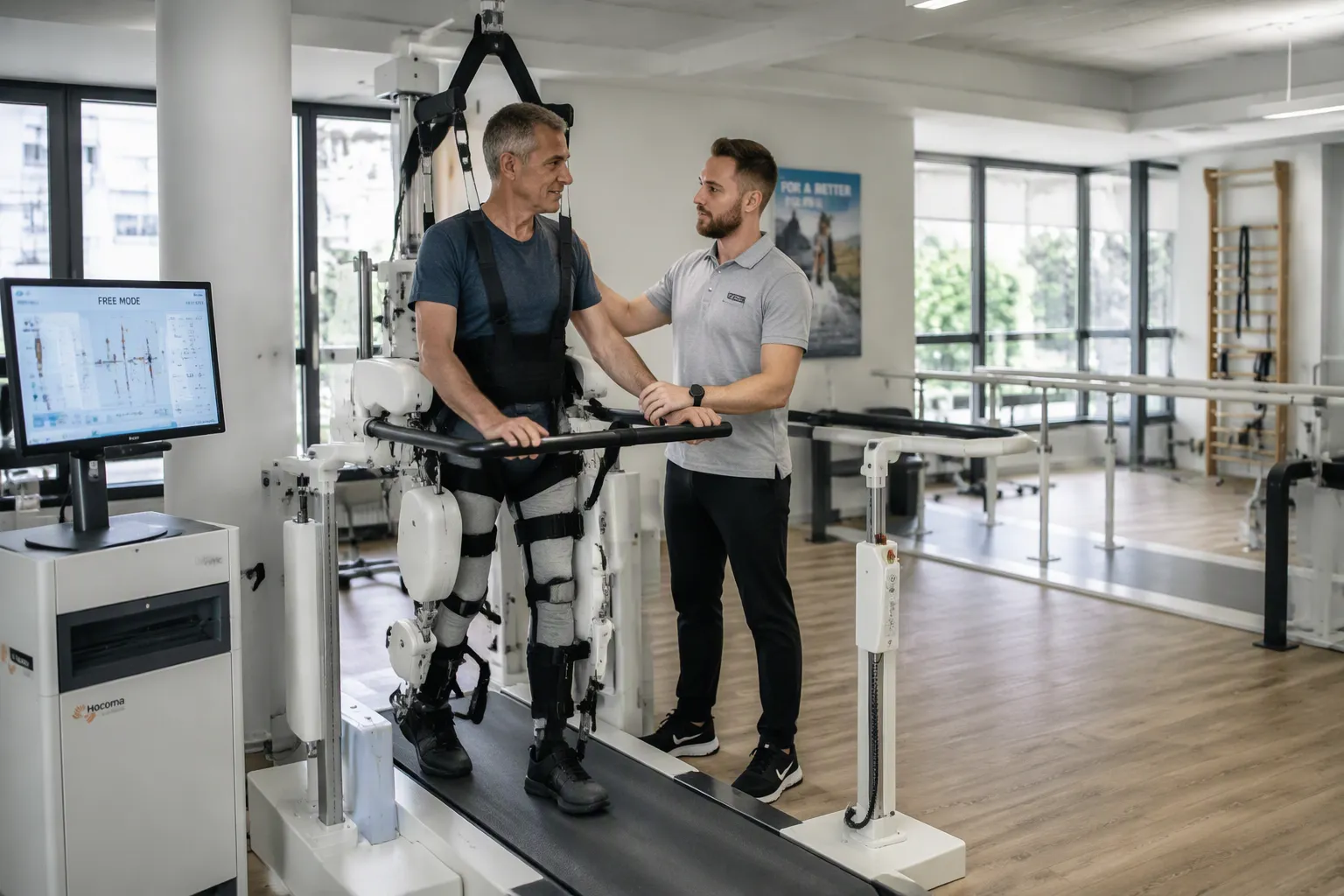
Candidacy starts with diagnosis, standing tolerance, and joint status. Stroke patients, spinal cord injury patients, and people with Parkinson's disease form the core of most robotic programs. Stroke patients need intensive, repetitive training to rebuild strength, coordination, and mobility. Stroke rehabilitation teams also treat traumatic brain injury, multiple sclerosis, and primary lateral sclerosis. Stroke patients with low standing tolerance often begin in a tethered exoskeleton. Stroke rehabilitation programs then advance them to end-effector devices. Stroke patients who regain proximal control move to wearable exoskeletons under minimal assistance. That staged path delivers individualized progression. Stroke rehabilitation units serving children with cerebral palsy need pediatric setups. Stroke patients after joint replacement, complex fracture, or ligament reconstruction use the device to retrain movement patterns. Stroke rehabilitation also covers musculoskeletal deconditioning and chronic pain with functional limitation. Stroke patients with contracture or joint instability need assessment before admission. Qian Jing Rehabilitation offers pediatric, adult, and bariatric models, so body size never blocks candidacy. Stroke rehabilitation candidacy rests on detailed medical and functional assessment. Stroke patients who cannot stand may still benefit, because non-ambulatory individuals may gain more from robot-assisted gait training than those already walking. Stroke rehabilitation research includes a case report on primary lateral sclerosis with improved functional ambulation. Stroke patients there trained through finely controlled, intensive, repetitive, task-oriented activity.
Standing tolerance decides the entry point, and joint status decides the ceiling. A patient with limited hip extension may need a device that controls the knee and ankle separately. A patient with flaccid limbs may need more support at each segment. End-effector devices accommodate a wider range of body morphology, while exoskeletons need a suitable fit. Match the device to the deficit, not the diagnosis alone. Your rehabilitation hospital should document these criteria in the intake form.
Workflow and Setup Efficiency
Setup time shapes staffing and setup burden. Therapists report 10–15 minutes for the first session, considerably less once they know the patient's measurements. One therapist can run robot-assisted gait training, versus two or three therapists needed for safe overground walking practice with an unaided patient. That ratio changes staffing requirements and frees therapists for other patients. Staffing and setup burden also depends on scheduling. Physiotherapists describe time constraints when a patient uses a robotic device within a typical session, often due to lengthy setup procedures. Build setup into the schedule instead of squeezing it in. The real rehab workflow rewards devices that fit the daily therapy block.
Stroke patients need predictable turnover between sessions. Stroke rehabilitation schedules should reserve gait training blocks at peak demand. Stroke patients recover faster when sessions start on time. Track gait distance, step count, and gait speed for each stroke patient. Stroke rehabilitation teams can then compare gait performance across weeks. Consistent gait training supports gait recovery. Your gait program should also plan for gait evaluation time. Match device throughput to your patient mix. Review gait data and gait cycle timing in weekly rounds. Protect gait rehabilitation blocks for these patients. Stroke rehabilitation leaders should audit gait rehabilitation utilization each quarter. Strong gait rehabilitation planning keeps the unit efficient.
Schedule setup as a separate line item in the therapy block. A 10–15 minute setup on the first session shrinks once measurements are on file, so repeat patients move faster. Reserve the device for patients who need repetition, and route others to conventional therapy. That split protects throughput and keeps the device busy without overloading staff.
Regulatory Compliance and Clinical Evidence
FDA Clearance and CE Marking
FDA clearance shows that a device passed the agency's safety and effectiveness review for its stated use. CE marking shows that the device meets European health, safety, and environmental protection standards. Both marks give your hospital a written basis for buying decisions and accreditation review. Ask every vendor for the certificate scope, not just a logo on a brochure. Qian Jing Rehabilitation systems hold CE and ISO 13485 certification, and every unit carries a 2-year warranty. ISO 13485 covers the quality management system behind manufacturing. That matters for your rehabilitation audit trail.
Reading Robotic Gait Training Evidence
Read trial results through outcome measures you already trust. The Fugl-Meyer Assessment (FMA) tracks motor recovery. The Berg Balance Scale (BBS) tracks balance. The Trunk Impairment Scale (TIS) tracks trunk control. Walking speed, step count, and distance track real-world gait function. A meta-analysis of robotic-assisted gait training reported clear gains for stroke patients. FMA-LE rose by a mean difference of 2.39 (95% CI 0.41–4.36, P=0.02) at 4 weeks. FAC rose by 0.57 (95% CI 0.32–0.82, P<0.001). Exoskeleton robot-assisted gait training lifted 6MWT by 31.26 meters (95% CI 22.57–39.95, P<0.001). The 10MWT gain of 0.16 m/s exceeded the minimal clinically important difference.
Outcome Measure | Subgroup | Effect (MD) | 95% CI | P value |
|---|---|---|---|---|
FMA-LE | 4-week intervention | 2.39 | 0.41–4.36 | 0.02 |
FAC | 4-week intervention | 0.57 | 0.32–0.82 | <0.001 |
6MWT | Exoskeleton RAGT | 31.26 | 22.57–39.95 | <0.001 |
10MWT | Exoskeleton RAGT | 0.16 m/s | — | exceeds MCID |
Use these numbers to find the best candidates for stroke rehabilitation. Stroke patients with low ambulation scores gain the most from intensive robotic gait training. Stroke patients who already walk independently gain less. Match clinical requirements to your stroke rehabilitation intake criteria. Track gait speed and gait distance for every stroke patient in your stroke rehabilitation program. Review gait data each month. Strong gait rehabilitation evidence supports a focused stroke rehabilitation unit.
Cost Considerations for a Robotic Gait Trainer
Purchase, Maintenance, and Training
The total cost of ownership goes far beyond the invoice. Published figures for one high-end system show a purchase price of €321,160 in 2007 and €881,292 for a 2022 model. Annual depreciation was €53,527 and €146,882, and annual service costs were €8,060 and €20,400. Ceiling-mounted robotic body-weight support systems often cost $150,000–$550,000 or more, plus site engineering and integration labor. Set aside a separate budget for installation and site prep, therapist certification, calibration, harness replacement, and software updates. Factory-direct pricing and global technical support change this math, so ask each vendor to quote them in writing.
Device | Procurement price (€) | Annual depreciation (€) | Annual service costs (€) |
|---|---|---|---|
Lokomat® (2007) | 321,160.34 | 53,527 | 8,060 |
Lokomat® FreeD Kombi (2022) | 881,292 | 146,882 | 20,400 |
Compare categories on the same basis. One costing study put annual therapy cost at €83,124 for a robotic gait trainer against €39,398 for conventional therapy in 2013. The same study showed €197,638 against €53,524 in 2022. Personnel and depreciation cause most of that gap. A robotic gait trainer earns its place through volume and consistency, not through a lower unit price.
Reimbursement and Budget Planning
Reimbursement rarely comes as a separate robotic gait line item. Payers may bundle it, deny it, or fold it into existing therapy codes. Build your case on capacity instead. Robotic gait training expands the volume of safe therapy a clinician can deliver. This matters for the functional mobility scores facilities report under CMS Section GG. Those scores increasingly tie to Medicare reimbursement through Value-Based Purchasing. Automated metrics also document objective progress as value-based care models expand.
Frame the budget around your patient mix. Stroke patients with low ambulation scores gain the most, and a steady stroke patients census keeps utilization high. Track gait speed, gait distance, and step count for every stroke patients cohort. Present those numbers beside therapist hours saved. Administrators approve capital when gait rehabilitation data supports the case.
Rate each option on the four pillars, then add up the scores. No device is best at everything. Your patient mix and workflow decide what counts most, so great technical scores cannot make up for a poor fit in your unit.
Make a simple checklist with criteria as rows and devices as columns. Score each box, add the totals, and share the sheet with your evaluation committee. This format keeps the debate focused on evidence.
End with on-site demos and trial placements before you commit. Invite therapists and administrators to both. Their hands-on feedback closes the gap between a brochure and your daily therapy block.
FAQ
Which patients benefit most from a robotic gait trainer?
Patients who cannot stand for long and have trouble walking gain the most. Stroke patients with low walking scores respond best. People with spinal cord injury and Parkinson's disease also benefit. Check joint health and standing tolerance when a patient comes in. Qian Jing Rehabilitation makes child, adult, and larger-body models for different body sizes.
How long does setup take during a therapy session?
Plan for 10–15 minutes the first time. Later sessions go faster once you save the patient's measurements. One therapist can run robotic gait training alone. Regular overground practice often needs two or three staff members. Add setup time to the therapy block so your schedule stays on track.
What evidence should our committee review before buying?
Look at outcome measures you already trust. The Fugl-Meyer Assessment tracks motor recovery, and the Berg Balance Scale tracks balance. Walking speed, step count, and distance track real-world function. Find trials that report these measures for stroke patients. Match the evidence to your own patient mix.
What certifications and warranty terms should we confirm?
Ask for the full scope of each certificate, not just a logo. FDA clearance and CE marking give your hospital a written basis for accreditation review. Qian Jing Rehabilitation systems hold CE and ISO 13485 certification. Every unit comes with a 2-year warranty. Get service terms and spare parts availability in writing.
How do we build a budget case for administrators?
Build your case around capacity, not unit price. A robotic gait trainer lets one clinician deliver more safe therapy. Track gait speed, gait distance, and step count for each group. Show those numbers next to therapist hours saved. Administrators approve spending when data supports the case.

