


How to Choose a Reliable Active Passive Trainer Manufacturer for Rehabilitation Equipment Procurement
With the increasing demand for rehabilitation solutions worldwide, hospitals, rehabilitation centers, nursing facilities, and medical equipment distributors are looking for reliable suppliers of intelligent rehabilitation devices. Among these solutions, active passive trainers have become an important tool for improving motor function, muscle strength, and mobility recovery.
An active passive trainer is a rehabilitation device that combines passive movement, active exercise, and motor-assisted training to support patients at different recovery stages. It is widely used for stroke rehabilitation, neurological recovery, orthopedic therapy, elderly mobility training, and home rehabilitation.
For healthcare providers and distributors, choosing the right active passive trainer Manufacturer is essential. A professional manufacturer should not only provide high-quality equipment but also have strong research and development capabilities, strict quality control, certification support, and long-term technical service.
Qianjing Rehabilitation specializes in the development and manufacturing of intelligent rehabilitation equipment, providing advanced active passive trainers for hospitals, clinics, rehabilitation centers, and healthcare organizations worldwide.
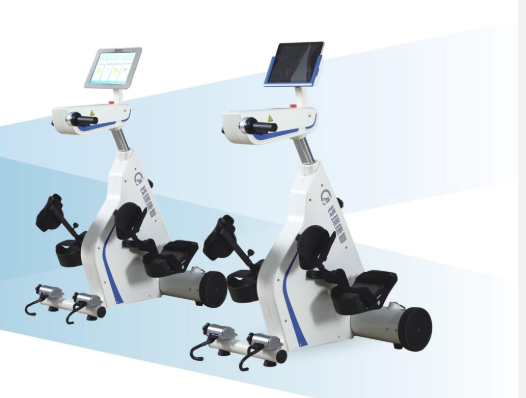
What Is an Active Passive Trainer?
An active passive trainer is an intelligent rehabilitation device designed to assist patients with repetitive upper and lower limb exercises. Unlike traditional fitness equipment, it is developed specifically for medical rehabilitation and can provide different training modes according to the patient's physical condition.
The main training modes include:
Passive Training Mode
In passive mode, the motor drives the patient's limbs to complete movement without requiring strong muscle participation. This mode is suitable for early-stage rehabilitation when patients have limited muscle strength or poor motor control.
Active Training Mode
In active mode, patients use their own muscle strength to complete movements. The system helps monitor exercise performance and encourages patients to improve muscle activation and endurance.
Assisted Training Mode
Assisted mode provides additional motor support when patients cannot complete movements independently. This allows gradual improvement while preventing excessive fatigue.
Because of these flexible training methods, active passive trainers are widely used in neurological rehabilitation, orthopedic recovery, and long-term mobility improvement programs.
Why Choose a Professional Active Passive Trainer Manufacturer?
Selecting an experienced active passive trainer Manufacturer directly affects product reliability, patient safety, and long-term business development. Professional manufacturers focus not only on production but also on rehabilitation technology, clinical requirements, and user experience.
1. Professional Rehabilitation Equipment Design
A reliable active passive trainer Manufacturer should have a deep understanding of rehabilitation science and patient needs.
Medical rehabilitation equipment must consider:
Patient safety
Comfortable operation
Adjustable training intensity
Different recovery stages
Therapist requirements
Unlike ordinary exercise machines, professional active passive trainers are designed to support patients with limited mobility, neurological disorders, and physical impairments.
Qianjing Rehabilitation develops rehabilitation equipment based on practical clinical applications, helping healthcare professionals provide more effective and personalized training programs.
2. Intelligent Active and Passive Switching Technology
One of the most important features of modern active passive trainers is intelligent switching between different training modes.
The system can detect the patient's movement ability and automatically provide suitable assistance.
For example:
Patients with weak muscles can start with passive training.
Patients with improved strength can move to assisted training.
Patients with better recovery can perform active exercise.
This progressive rehabilitation approach helps patients safely improve motor ability while reducing unnecessary strain.
Active Passive Trainer for Upper and Lower Limb Rehabilitation
An active passive trainer for upper and lower limb provides a complete rehabilitation solution by combining arm and leg exercise functions in one device.
Traditional rehabilitation equipment often focuses on only one body part. However, upper and lower limb coordination plays an important role in improving overall mobility and daily activities.
| Training Function | Rehabilitation Benefits |
|---|---|
| Upper limb exercise | Improves arm mobility and coordination |
| Lower limb exercise | Supports leg strength and movement recovery |
| Passive movement | Helps patients in early rehabilitation stages |
| Active exercise | Enhances muscle strength and endurance |
| Assisted training | Provides progressive recovery support |
By integrating multiple functions, an active passive trainer for upper and lower limb helps hospitals and rehabilitation centers reduce equipment investment while offering comprehensive treatment options.
Key Features of Advanced Active Passive Trainers
When selecting an active passive trainer Manufacturer, buyers should consider whether the equipment includes advanced rehabilitation features.
Intelligent Motor-Assisted Training
A high-quality rehabilitation trainer should provide accurate motor assistance according to patient ability.
The system should support:
Adjustable training speed
Multiple resistance levels
Automatic assistance adjustment
Smooth and controlled movement
Real-Time Training Monitoring
Professional active passive trainers provide important training information for therapists, including:
Exercise duration
Training speed
Resistance level
Movement performance
Training progress
These functions allow therapists to evaluate patient improvement and adjust rehabilitation plans accordingly.
User-Friendly Touchscreen Control
Modern rehabilitation equipment uses intelligent touchscreen systems to simplify operation.
A clear interface allows therapists and patients to easily select training programs and monitor exercise results.
Wheelchair-Compatible Design
Many patients requiring rehabilitation have limited mobility and may use wheelchairs.
A professional active passive trainer should provide:
Easy patient positioning
Stable support structure
Safe operation
Comfortable training experience
This makes rehabilitation more accessible for stroke patients, elderly users, and individuals with mobility limitations.
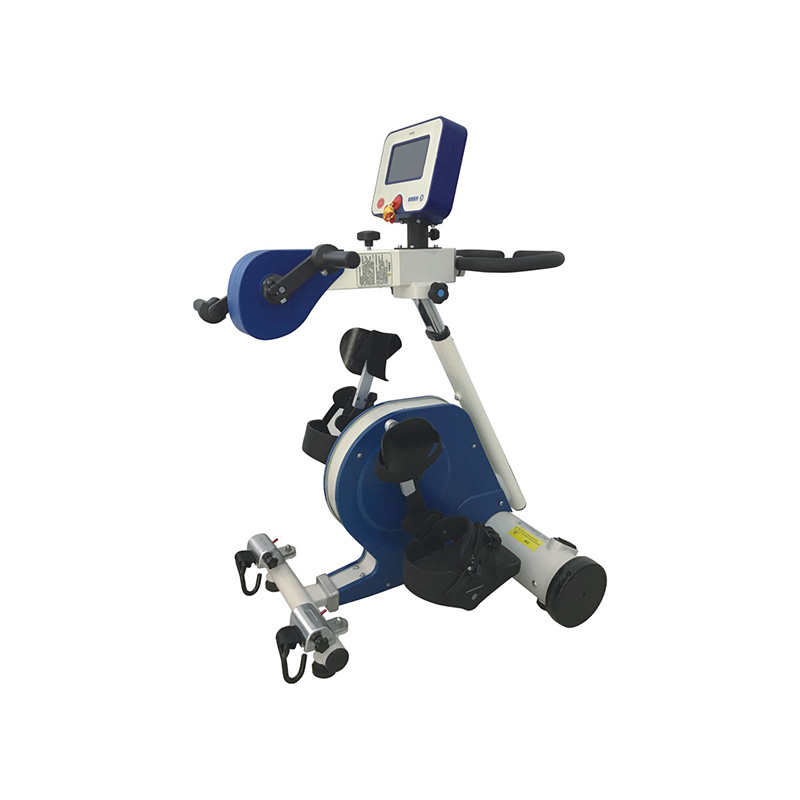
Applications of Active Passive Trainers
Stroke Rehabilitation
Stroke patients often experience reduced muscle strength, poor coordination, and limited movement ability.
Active passive trainers provide repetitive and controlled exercises that help improve:
Limb flexibility
Muscle activation
Movement coordination
Functional recovery
Neurological Rehabilitation
Patients with neurological conditions may require long-term motor training.
Active passive trainers are commonly used for:
Stroke recovery
Spinal cord injury rehabilitation
Parkinson's disease rehabilitation
Brain injury recovery
Orthopedic Rehabilitation
After surgery or injury, patients need gradual movement training to restore mobility.
Active passive trainers support rehabilitation after:
Joint replacement
Fracture recovery
Sports injuries
Muscle weakness
Elderly and Home Rehabilitation
With aging populations increasing worldwide, home rehabilitation solutions are becoming more important.
Compact active passive trainer bikes allow elderly users to perform regular movement exercises under safer conditions.
How to Select the Right Active Passive Trainer Manufacturer?
For hospitals, distributors, and healthcare projects, choosing the right supplier requires careful evaluation.
Manufacturing Experience
An experienced active passive trainer Manufacturer should have professional production capabilities and knowledge of rehabilitation applications.
Important factors include:
Product development experience
Quality management system
Manufacturing capacity
Technical support capability
Certification and Quality Control
Medical rehabilitation equipment requires strict quality standards.
Reliable manufacturers should provide:
CE certification
Quality inspection procedures
Product testing documentation
International export experience
OEM and ODM Capability
Different markets may have different requirements.
A professional manufacturer should provide customization services such as:
Product appearance customization
Functional adjustments
Packaging solutions
Technical modifications
This helps distributors create competitive rehabilitation equipment solutions for their target markets.
Why Choose Qianjing as Your Active Passive Trainer Manufacturer?
Qianjing Rehabilitation is a professional active passive trainer Manufacturer specializing in intelligent rehabilitation equipment development and production.
With years of experience in rehabilitation technology, Qianjing provides reliable active passive trainers for hospitals, rehabilitation centers, medical distributors, and healthcare projects worldwide.
Our advantages include:
Professional R&D Capability
Qianjing continuously develops rehabilitation technologies based on healthcare market requirements and patient needs.
Complete Manufacturing Process
From product design and assembly to quality inspection, every production stage follows strict standards to ensure reliable performance.
Global Healthcare Solutions
Our rehabilitation equipment is designed to support different medical environments, including hospitals, clinics, nursing facilities, and home care applications.
OEM and ODM Services
We support customized rehabilitation equipment solutions for international partners.
By combining manufacturing expertise, intelligent technology, and rehabilitation knowledge, Qianjing aims to become a trusted global active passive trainer Manufacturer.
Active Passive Trainer Bike vs Traditional Exercise Equipment
| Active Passive Trainer Bike | Traditional Exercise Equipment |
|---|---|
| Designed for rehabilitation | Designed mainly for fitness |
| Supports passive and active modes | Usually active exercise only |
| Provides motor assistance | No assistance function |
| Suitable for patients with limited mobility | Requires stronger physical ability |
| Supports therapist monitoring | Limited training feedback |
An active passive trainer bike provides a more professional solution for patients who need controlled, progressive rehabilitation.
Frequently Asked Questions About Active Passive Trainers
What is an active passive trainer?
An active passive trainer is a rehabilitation device that combines passive movement, active exercise, and motor-assisted training to improve patient mobility and muscle function.
Who can use active passive trainers?
Active passive trainers are suitable for patients recovering from stroke, neurological disorders, orthopedic surgery, muscle weakness, and mobility limitations.
What is the difference between active and passive training?
Passive training uses motor assistance to move the patient's limbs, while active training requires patients to participate using their own muscle strength.
How do I choose an active passive trainer Manufacturer?
Choose a manufacturer with rehabilitation expertise, certifications, quality control systems, technical support, and global export experience.
Can wheelchair users use an active passive trainer?
Yes. Many modern active passive trainers are designed with wheelchair-friendly structures, allowing patients to complete rehabilitation safely while seated.
Why is an active passive trainer better than a normal exercise bike?
An active passive trainer bike provides rehabilitation-focused features such as motor assistance, adjustable training modes, and patient monitoring, while a standard exercise bike is mainly designed for fitness.
Conclusion
Choosing the right active passive trainer Manufacturer is an important decision for healthcare providers and rehabilitation equipment distributors.
A professional manufacturer should provide more than equipment. It should offer advanced rehabilitation technology, reliable quality, customization capability, certification support, and long-term service.
With intelligent design and professional manufacturing experience, Qianjing Rehabilitation provides advanced active passive trainers, including active passive trainer bikes and upper and lower limb rehabilitation solutions, helping healthcare professionals improve patient recovery outcomes worldwide.
Please Contact Us!
Recent News
1.How To Choose The Right Overhead Hoist Track Systems
2026-05-202.Ceiling Mounted Lift VS Floor Patient Lift: Which Is Better for Hospitals and Rehab?
2026-05-203.Top 7 benefits of using overhead patient lifts in healthcare facilities
2026-06-124.Active Passive Trainer Bike: The Complete 2026 Guide for Clinical & Home Rehabilitation
2026-05-095.The Ultimate Guide to Using a Portable Electric Patient Lift in Elderly Care
2026-04-226.What Is an Electric Patient Lift?
2026-04-237.What is an Overhead Ceiling Lift for Patients? A Complete Guide
2026-04-23

