


Overhead Lift Systems Explained and How to Choose One
Overhead lift systems are ceiling-mounted devices that move a person safely from one place to another. This post explains how these systems work and walks you through the factors that determine the right choice. Think about your daily transfer situation as you read. Who needs lifting? Where does the transfer happen? How often does it occur? Start with your own routine. A ceiling lift that suits a bedroom may not fit a bathroom. Consider the path from a bed to a wheelchair and the space around it. Reliable safe transfers depend on these details, and they shape every decision that follows.
Key Takeaways
Overhead lift systems are devices attached to the ceiling that move a person safely from one place to another.
Pick a portable lift if you need it for a short time or for rentals. Pick a fixed lift if you do daily transfers often.
Pick a lift whose weight limit fits the user's weight. Add at least 50 extra pounds for safety.
Plan the track layout around the rooms and the paths where transfers happen.
Look for safety features, such as an emergency stop button and a way to lower the lift by hand.
A professional installer makes sure the track is secure and the lift works correctly.
Routine upkeep means checking the sling straps, the battery, and how clean the track is.
Talk to a trained supplier or therapist to make sure you pick the best lift for your needs.
What Are Overhead Lift Systems?
A One-Sentence Definition
An overhead lift system is a device mounted on the ceiling. It raises, moves, and lowers a person along a track to complete a safe transfer. Its purpose is simple: move someone from a bed, chair, or floor to another spot without manual lifting.
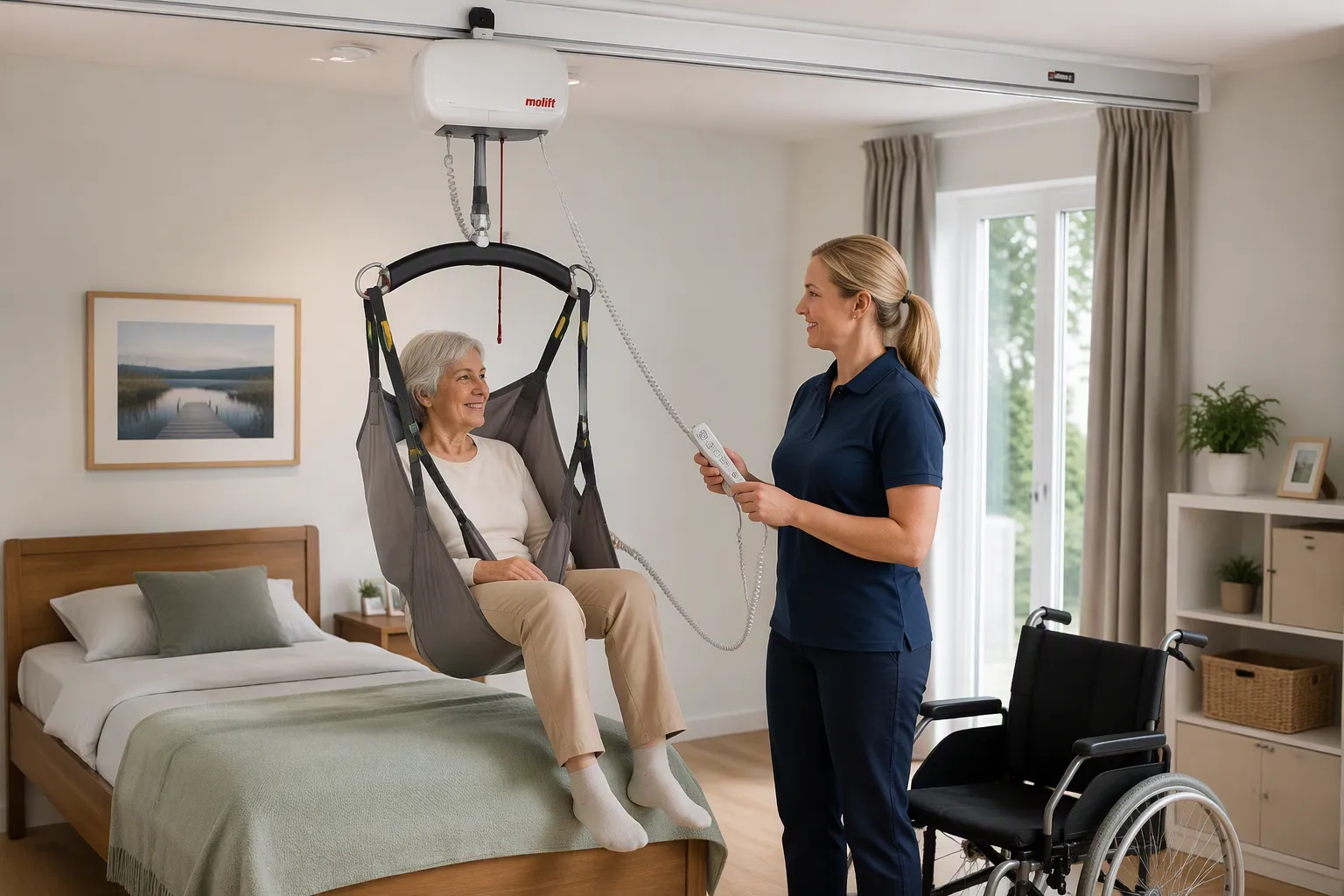
That sentence carries real weight in daily care. You attach the person to a sling, and a motor does the lifting. The track carries the load across the room. Your hands guide the movement instead of supporting body weight. An overhead ceiling lift system combines three parts: track, motor, and sling.
Who Uses Them and Where
Overhead lift systems serve hospitals, rehabilitation centers, nursing homes, and private homes. Caregivers rely on them for lifting and transferring patients with limited mobility. Residents gain more independence in daily routines.
Ceiling lift systems fit many rooms. You can mount a ceiling lift in a bedroom, a bathroom, a living area, or a therapy space. One supplier note explains that ceiling lifts are versatile and adaptable across settings, and crews can customize them to fit different spaces and requirements. A patient ceiling lift in a bathroom handles the hardest transfer of the day. An overhead patient lift in a bedroom covers the morning routine. A ceiling lift in a living area supports seated transfers.
Overhead vs. Floor Lifts
Overhead lift systems and floor lifts both move a person safely. The difference lies in fit and application, not quality.
A ceiling lift keeps the floor completely clear. A floor lift needs open floor space to maneuver around furniture, through doorways, and into bathrooms. In a small bedroom or a tight bathroom, that gap matters. A fixed ceiling track system also frees up floor space, minimizes obstacles, and gives the individual more autonomy to transfer around a room. Ceiling lifts maximize usable floor space because the system is mounted overhead. A ceiling lift system mounts overhead and stays out of the way.
Transfer paths differ as well. A ceiling lift travels overhead on a straight, curved, or room-to-room track. A floor lift rolls along the ground and depends on clear routes. Caregiver effort stays low with both, yet a floor lift requires maneuvering while a ceiling lift glides above. Ceiling lifts reduce caregiver effort during repeated daily transfers. The ceiling lift's track defines the route.
Setting guides the choice. A home with narrow hallways often suits a ceiling lift system. A facility that needs one device across many rooms may prefer a portable option. Neither choice is wrong. Match the device to the space and the routine. A ceiling lift handles the bathroom transfer well.
How Ceiling Lift Systems Work
Core Components
Track and Mounting
The track is the rail that carries the load across the room. Mounting brackets hold it firmly to the ceiling structure. A ceiling lift track system comes in straight, curved, and room-to-room layouts. The mounting must fit your ceiling type and hold the rated load. Ask your supplier to check the ceiling structure before installation.
Lift Motor Unit
The motor unit does the lifting. It moves along the track and raises or lowers the sling. A patient ceiling lift depends on this unit for smooth motion. Check the motor's durability rating and how well it moves along curves. Battery life matters too, because a cordless unit charges at a docking station on the rail.
Sling and Spreader Bar
The sling cradles the person. The spreader bar holds the sling straps apart and keeps the load balanced. You pick a sling by size, material, and transfer type. A well-fitted sling protects the skin and keeps the person secure during patient transfers.
Built-In Safety Features
Modern ceiling lift systems include several protections. The table below sums up the common ones.
Safety Feature | Description |
|---|---|
Emergency Stop Button | Stops the lifting process right away during an emergency, giving caregivers quick access to stop movement. |
Overload Protection | Stops lifting beyond the system's weight capacity, protecting the lift's integrity. |
Audible and Visual Indicators | Warn users about battery status, malfunctions, or proper sling engagement. |
Emergency Stop and Manual Lowering
The emergency stop button gives you an instant halt. Manual lowering lets you bring the person down if power fails. Test both functions during your demo.
Weight Limits and Lockouts
Every ceiling lift system has a rated capacity. Overload protection enforces that limit. Lockouts prevent use beyond safe parameters. Check the capacity against the heaviest user before you buy.
The Transfer Sequence
A typical transfer follows a fixed order. First, you position the ceiling lift above the person. Second, you attach the sling and check the straps. Third, you press the control to raise the person clear of the surface. Fourth, you guide the unit along the track to the destination. Fifth, you lower the person gently and release the sling. This sequence supports safe and efficient transfers. A ceiling track system that moves smoothly shortens each step. Overhead ceiling track systems also reduce caregiver strain. Watch durability and battery life here, because both affect daily reliability. A ceiling lift that runs out of charge mid-transfer disrupts the routine. A ceiling lift with a long-lasting battery keeps the schedule intact. Choose a ceiling lift built for repeated use. A ceiling lift track system with quality components lasts longer. These ceiling lifts repay the investment over years of service.
Types of Overhead Lift Systems
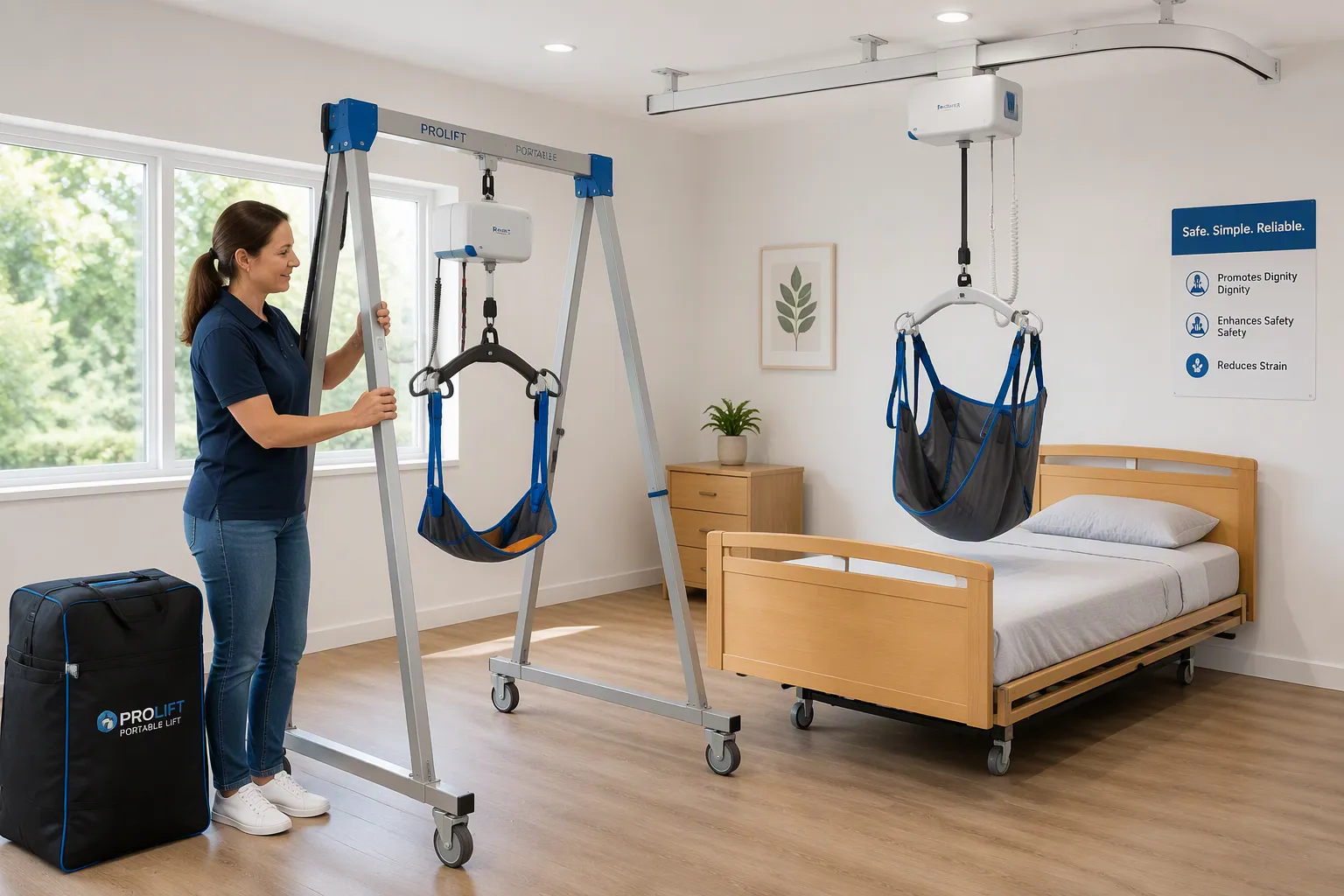
Overhead lift systems come in three main setups. Each one works best in a different place and routine. The right choice depends on your space, your timeline, and the person's weight.
Portable Overhead Lifts
A portable ceiling lift system uses a free-standing frame instead of drilled anchors. You put it together, use it, and take it down without touching the walls or ceiling. Many units weigh under 10 pounds and come with a carrying case. That design lets you move a portable ceiling lift between rooms or to another home. A portable ceiling lift also works in rooms with unusual ceiling layouts, because no mounting is needed. You can take down and set up a portable ceiling lift on different track systems as needs change.
Best Use Cases
Pick a portable ceiling lift when the need is temporary or linked to a recovery period. A portable ceiling lift fits use in many places, like a home that hosts care only part of the week. A portable ceiling lift also works well when you plan to move the device to a different house later. Renters often choose a portable ceiling lift for the same reason: no permanent changes to the property.
Fixed Overhead Lifts
A fixed ceiling lift bolts to the ceiling structure and stays in place. These ceiling lift systems save floor space and improve hygiene, since nothing touches the floor. A fixed ceiling lift runs on a ceiling-installed track and moves nonstop across a room or facility. Track layouts include turntables and multiple points, which let the motor change direction with the push of a button. A traverse track pairs two parallel rails with one moving cross rail for full room coverage. QianJing Rehabilitation offers fixed ceiling-mounted solutions, including the Electric Patient Lift with Intelligent Gait Rehabilitation System E005. That model combines transfer with gait training and carries CE, ISO 13485, and FDA certifications.
Best Use Cases
A fixed ceiling lift fits hospitals and facilities with frequent daily transfers. A ceiling lift track system with room-to-room rails serves a bedroom-to-bathroom route. A patient ceiling lift in one room handles a single, repeated task well. An overhead ceiling lift with a turntable helps in small areas where the motor must turn corners.
Bariatric Overhead Lifts
Bariatric models raise the rated capacity well above standard units. Typical safe working loads include 363 kg (800 lb), 454 kg (1,000 lb), and 544 kg (1,200 lb).
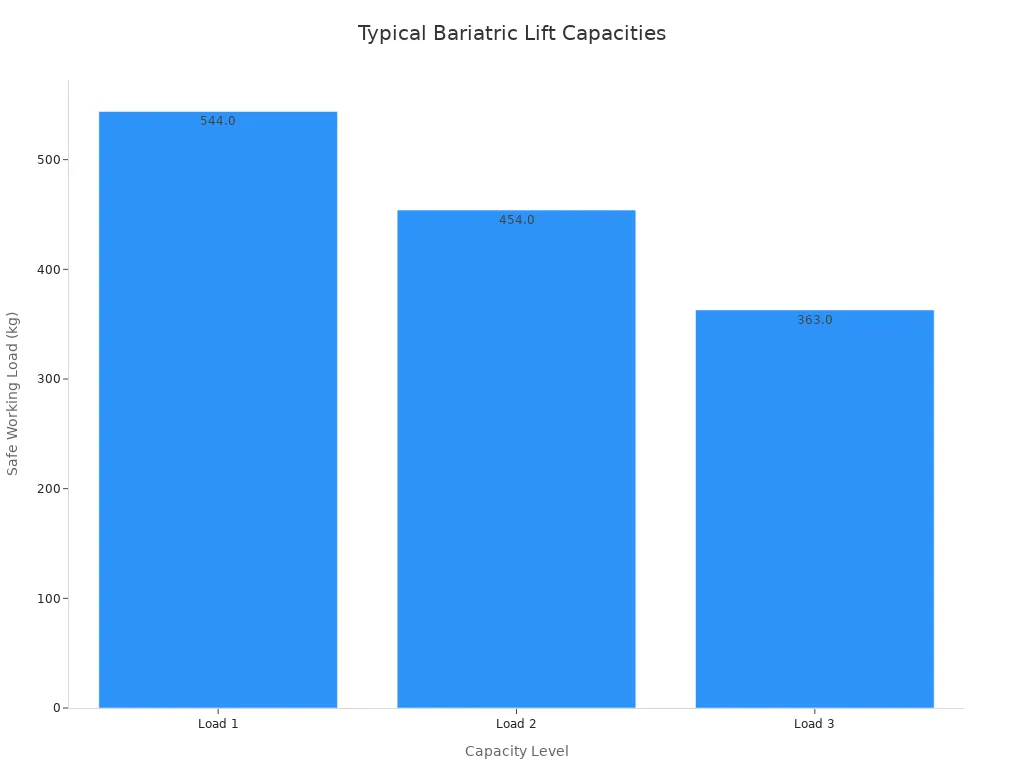
These ceiling lifts use reinforced tracks and stronger motors. A bariatric ceiling lift system also needs a wider sling and a higher spreader bar rating.
Best Use Cases
Choose a bariatric ceiling lift for users above standard capacity. A bariatric ceiling lift in a rehabilitation ward supports heavier patients during daily transfers. Match the track system and sling to the same rating as the motor.
Choosing the Right Ceiling Lift: Key Factors
User Needs and Caregiver Routine
Begin with the person who needs lifting. Make a map of every spot where that person sits, lies down, or uses the toilet during a normal day. That transfer map tells you more about the right ceiling lift than any brochure. A user who only moves from bed to wheelchair needs a simple straight run. A user who also needs bathroom and living-room transfers needs a longer ceiling lift track system.
Watch the caregiver at work before you decide. Notice how often transfers happen, which hand holds the control, and where the caregiver stands. Transfers that repeat several times a day reward easy operation. Look for controls that are easy to figure out, simple charging, and smooth motion. Padded handles and handsets that are easy to grip reduce strain. If the user helps with the transfer, where the controls sit and the sling style matter even more. A handset with large buttons you can feel suits hands with limited dexterity.
Ask a physical or occupational therapist to review the plan. A therapist can confirm the user's strength, balance, and support level. That input shapes the sling choice and the transfer height. It also points out conditions that get worse over time, where you should build in extra room now. A 300 lb-rated lift for a 260 lb user may not be enough later, as weight gain and weaker muscles make transfers harder.
Weight Capacity and Sizing
Capacity is the first hard number to confirm. The rated safe working load should be at least 50 lbs more than the user's current weight. Treat the structural rating as a design maximum, not an everyday target. A 280 lb user should not run a 300 lb-rated ceiling lift every day. Patients over 400 lbs need a bariatric model with a matching sling.
The rated load applies to the whole ceiling lift system: frame, motor, and cradle attachment. The sling has its own separate weight rating, and that rating must also meet or exceed the user's weight. Check both numbers before you sign.
Consideration | Guidance |
|---|---|
Safety margin | Rated load is at least 50 lbs more than current weight |
Bariatric threshold | Users over 400 lbs need a bariatric lift and sling |
System-wide rating | Frame, motor, and sling each meet the user's weight |
Installation | Track mounts to ceiling joists after a structural assessment |
Track Layout and Room Geometry
Straight, Curved, and Room-to-Room Track
Track shape follows the transfer map. A simple straight rail from bed to wheelchair often spans about 10 feet. Curved sections change direction where a wall or doorway blocks the line. A 90-degree curve with an 8-inch turning radius is a cost-effective way to turn a corner. Turntables add take-off points at fixed intervals, so one motor can serve several destinations. Custom layouts allow a continuous run between rooms. Fixed ceiling tracks use powder-coated aluminum rails in straight and curved sections, installed with brackets that depend on ceiling height, shape, and joist access.
Ceiling Height and Mounting Options
The installer checks ceiling material, joist spacing, and joist direction first. Joists that run in a usable direction with standard drywall make the job straightforward. Vaulted ceilings, joists running the wrong way, or plumbing in the path need more planning, yet they rarely rule out the project. Bathroom ceilings bring extra variables: moisture, tile, and fixtures. Framing over a tub or shower can be harder to reach, so an in-person look matters most there. A portable or freestanding track suits ceilings poorly suited to fixed mounting, or a home where relocation is likely.
Automation level belongs in this decision too. Basic ceiling lift options stop at safe transfer. Higher-automation models add training functions. QianJing Rehabilitation's E005 shows the upper end, with intelligent gait following, dynamic weight reduction, and three training modes: Suspension, Fixed-Point, and Free. Compare ceiling lift options on technical performance, application fit, regulatory compliance, and cost. Insurance coverage and durability belong on the same checklist. So do versatility and lifting capacity. Knowing how to choose the best ceiling lift means weighing all of these together. The right patient ceiling lift fits the routine, the room, and the budget. Use the same discipline when you compare ceiling track systems across suppliers. That approach shows you how to choose the best ceiling lift for your own space.
The Ultimate Ceiling Lift Guide: Installation and Maintenance
What Installation Involves
A ceiling lift installation follows a clear path. First, a consultant visits your home for a free in-home consultation. That visit covers what the user needs, the challenges they face, and their physical limits. Next, the consultant checks your home's layout and structural features. Then come measurements to figure out which ceiling lift solution fits best.
Professional vs. Dealer-Coordinated Installation
Both paths give you a safe result, and each one works in its own way. A professional installer handles the whole job: putting the track together, bolting it to structural support parts, attaching the unit, and testing that everything works. A dealer-coordinated path adds a planning step. The representative measures the area, draws up the custom layout, and gives you a detailed quote that covers the system and the installation.
Either way, the work follows the same physical steps. Ceilings hold up the floor above, not hanging weight, so structural support like unistrut carries the lift load. Doorway headers may need cutting so the unit can pass between rooms. A trained technician then puts together the ceiling lift track system, bolts it down, attaches the motor unit, and tests every function. Expect a safety checklist, a usage demo for the caregiver, and an owner's manual. Check for certifications such as CE, ISO 13485, and FDA, plus a warranty. QianJing Rehabilitation offers a 2-year warranty as one benchmark.
Routine Maintenance Checklist
Daily care keeps a ceiling lift reliable. Check the sling straps for fraying before each shift. Make sure the handset responds and the battery holds a charge. Wipe the track clean of dust and debris. Report any odd noise or jerky motion right away.
Inspection and Service Intervals
How often you inspect depends on how hard you use the system. The table below shows the pattern.
Inspection Type | Normal Use | Heavy Use | Severe Use |
|---|---|---|---|
Pre-operational (operator) | Daily / start of each shift | Daily / start of each shift | Daily / start of each shift |
Frequent inspection | Monthly | Weekly | Daily |
Periodic inspection | Yearly | Semi-annually | Quarterly |
Electrical inspections should happen at least quarterly, and load testing once a year or as industry rules require. Keep written records of periodic inspections. A qualified inspector does the full periodic exam. Take any ceiling lift out of service when a problem shows up. This complete guide to ceiling lifts ends where safe transfers begin: steady care of the patient ceiling lift you chose.
Your decision path follows a clear order. Figure out what you need, match the type, check capacity and track, pick the sling, then confirm safety and budget. That order keeps overhead lift systems connected to real daily routines.
The right ceiling lift fits the user's daily life and space. Compare ceiling lifts by how well they fit, not by price. A ceiling lift that matches the room helps make transfers safer. Pick a ceiling lift you can run with confidence. A ceiling lift should feel like it isn't even there. The best ceiling lift blends into the routine.
Talk to a qualified supplier or assessor next. They will look at your space and help you settle on a final ceiling lift choice. Ask which ceiling lifts work best for your home.
FAQ
How much weight can a ceiling lift hold?
The answer depends on the model. Standard ceiling lifts work for most users, and bariatric units can hold 363 kg (800 lb), 454 kg (1,000 lb), or 544 kg (1,200 lb). Always keep at least 50 lbs of extra room above the user's weight. Also check the sling's weight rating.
Do I need a structural assessment before installing a ceiling lift?
Yes. An installer first checks the ceiling material, how far apart the joists are, and which way they run. Structural support like unistrut carries the load. A free in-home consultation usually covers this step.
Can a ceiling lift move between rooms?
Yes, if you have the right track. Room-to-room rails and turntables let one ceiling lift reach several spots. A straight run from bed to wheelchair often covers about 10 feet. Curved sections get around corners.
What maintenance does a ceiling lift need?
Check the sling straps for fraying before each shift. Make sure the handset works and the battery holds a charge. Wipe the track clean. Report any strange noise or jerky motion right away. Set up regular inspections based on how much you use it.
How long does a ceiling lift battery last?
Battery life changes by model and use. Cordless units charge at a docking station on the rail. Ask your supplier about the rated runtime and confirm the unit can charge anywhere on the rail. A battery that lasts keeps transfers on schedule.
Does insurance cover a ceiling lift?
Coverage depends on the policy and where you live. Add insurance coverage to your checklist next to durability, versatility, and lifting capacity. Confirm the paperwork early. Ask your supplier for documents to support a claim.
Which certifications should I verify on a ceiling lift?
Look for CE, ISO 13485, and FDA marks. Check the warranty terms too. QianJing Rehabilitation offers a 2-year warranty as one benchmark. Confirm these points while you choose.
Can one ceiling lift serve a bariatric user?
Only if the whole system matches the load. Users over 400 lbs need a bariatric ceiling lift with a reinforced track, a stronger motor, and a wider sling. Standard ceiling lifts will not work. Match every part to the same rating.

